Browse categories
English
$
USD
Connect to your AI
Industrial Manufacturing and Engineering Consultant
Do you need a structured Design Failure Mode and Effects Analysis (DFMEA) for your product?
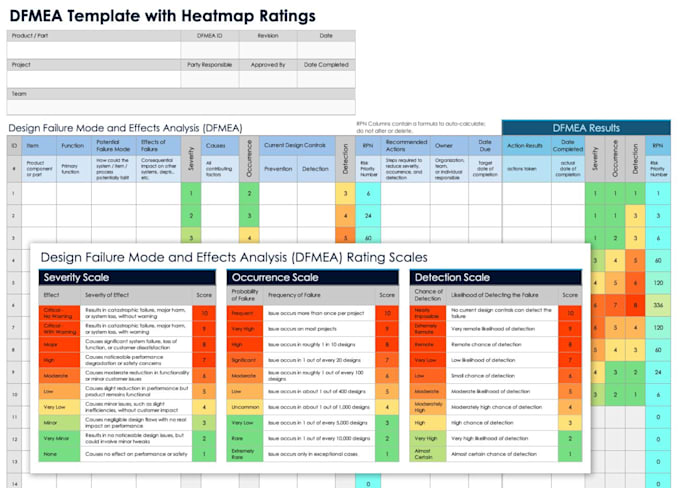
I can help prepare traditional DFMEA documentation for electric motors, electromechanical products and engineering designs.
My DFMEA service includes:
Identification of potential design failure modes
Failure effects and potential causes
Severity, Occurrence and Detection assessment
Risk Priority Number (RPN) calculation
Existing design controls
Recommended design improvement actions
Structured DFMEA documentation in Excel
I have practical experience in motor R&D and product development, which helps me approach design risks from an engineering perspective.
I can follow your supplied template, product information and scoring criteria.
Please contact me before ordering to discuss your product, design scope and expected number of failure modes.

Document type:
Documentation
•
Other
Industry:
Manufacturing
Language:
Bengali
•
English
Please inform the freelancer of any preferences or concerns regarding the use of AI tools in the completion and/or delivery of your order.
What is FMEA (Failure Modes and Effects Analysis)?
FMEA is a systematic engineering methodology used to identify potential failures in products, processes, or systems. It evaluates their effects, causes, and risks to help prioritize corrective and preventive actions.
Why is FMEA important for manufacturing and engineering businesses?
FMEA helps businesses identify potential problems before they occur. It supports proactive risk management, improves product and process reliability, reduces production losses, and strengthens overall quality performance.
How does the FMEA process work?
The FMEA process involves identifying potential failure modes, analyzing their effects and causes, and evaluating each risk based on Severity (S), Occurrence (O), and Detection (D). These ratings are used to calculate the Risk Priority Number (RPN) and prioritize improvement actions.
Which industries commonly use FMEA?
FMEA is widely used in automotive, electronics, electrical appliances, machinery, aerospace, medical devices, and general manufacturing industries. It is suitable for any industry where product reliability, process quality, and risk reduction are important.
What are the key benefits of implementing FMEA?
The major benefits include: - Improved product and process quality. - Early identification of potential failures. - Reduced production downtime and operational risks. - Lower rework, rejection, and failure costs. - Improved reliability and customer satisfaction. - Better preventive and corrective ac
When should FMEA be conducted?
FMEA is most effective during product design, process development, and manufacturing planning. However, it can also be performed on existing products and processes to identify risks and implement continuous improvements.
Who should be involved in the FMEA process?
FMEA is generally conducted by a cross-functional team involving professionals from engineering, R&D, production, quality assurance, maintenance, and other relevant departments. Their combined expertise helps identify and evaluate potential risks more effectively.
Can FMEA be applied to both product design and manufacturing processes?
Yes. FMEA can be applied to both product design and manufacturing processes. - DFMEA (Design FMEA): Identifies potential failures related to product design, components, and functionality. - PFMEA (Process FMEA): Identifies potential failures in manufacturing, assembly, and operational processes.
How can I get started with FMEA for my business?
Simply share your product details, manufacturing process, technical documentation, or specific engineering concerns. I will review the available information, identify potential failure modes, evaluate associated risks, and provide a structured FMEA report with recommended improvement actions.
