Browse categories
Explore
Fiverr Pro
English
$
USD
Building resilient cloud backends that scale seamlessly without breaking
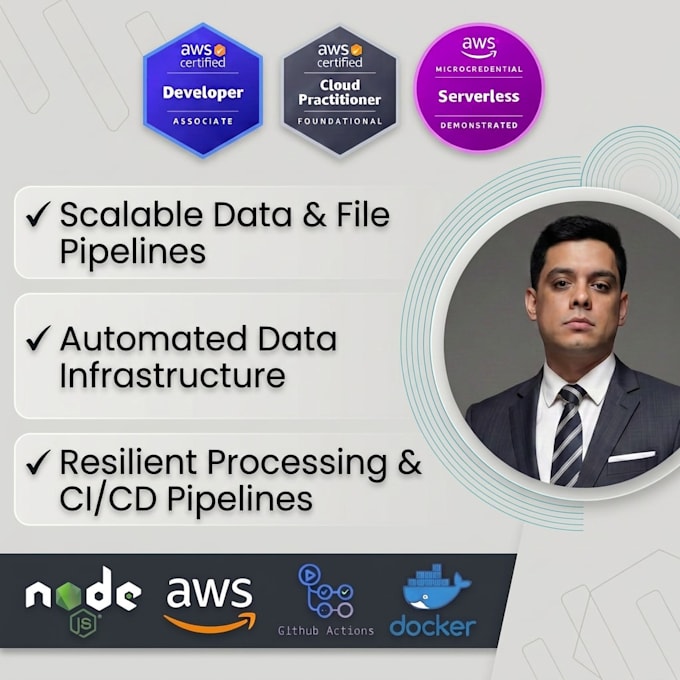
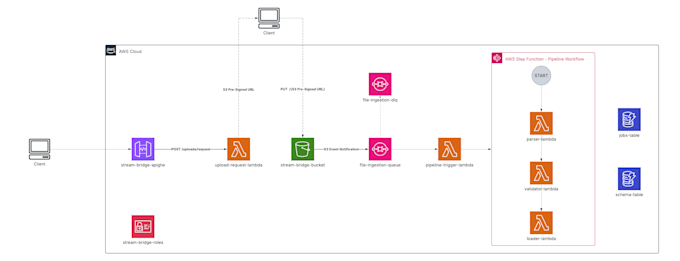
Are your app servers freezing or crashing when users upload large files? Or do you need to ingest massive, real-time data streams without slowing down your database? Processing heavy data synchronously ruins user experience and drains resources. I am an AWS Certified Developer Associate and Senior Backend Engineer. I will build an automated, un-crashable data pipeline on AWS using Node.js, TypeScript, and AWS CDK.
This service includes:
Standard vs Premium:
Standard handles large file batches (CSV/Excel/TXT) using queues to prevent timeouts. Premium scales to enterprise limits, building real-time ETL pipelines with AWS Kinesis & auto-scaled Fargate workers for continuous, high-volume data feeds.
Let's build your pipeline: lightweight, scalable, and ready for production!


Cloud Provider:
Amazon Web Services
Frameworks:
Npm
•
Terraform
What data sources and formats can this pipeline handle?
I handle standard files (CSVs, Excel, JSON, TXT and more) uploaded to S3, but also real-time, high-volume streaming data feeds (like IoT or application logs) using AWS Kinesis Data Streams. All data is securely parsed and streamed straight to your target DB.
How do you bypass the 15-minute execution limit of AWS Lambda?
For heavy, long-running batch files, the Premium tier deploys containerized AWS ECS Fargate workers. They scale dynamically based on queue size and run continuously without timeouts, ensuring your ETL processes never get interrupted.
Will processing millions of records slow down my primary database?
No. I apply ingestion throttling via AWS SQS or Kinesis consumers, combined with memory-efficient Node.js streams and database batch inserts. This buffers the database load, preventing performance lag on your frontend application.