Browse categories
Explore
Fiverr Pro
English
$
USD


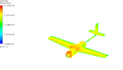
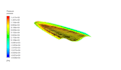
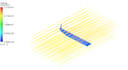


Want to see how air, water or heat moves through your design before building it? I run CFD and thermal simulations in ANSYS Fluent and deliver results you can base design decisions on.
Analyses I offer:
- Internal flow: pipes, ducts, valves (pressure drop, velocity)
- External aerodynamics: drag, lift and L/D for vehicles, UAVs, airfoils
- Heat transfer and conjugate heat transfer: heat sinks, electronics cooling, heat exchangers
- Steady and transient simulations
You receive:
- Velocity, pressure and temperature contours and streamlines
- Key values: drag/lift coefficients, pressure drop, max temperature
- Mesh independence check (Standard & Premium)
- PDF report with setup summary: mesh, turbulence model, boundary conditions
See my UAV and high-speed vehicle CFD projects in the portfolio.
Before ordering, message me your geometry and operating conditions (fluid, flow speed or rate, temperatures) so I can confirm scope.
Please inform the freelancer of any preferences or concerns regarding the use of AI tools in the completion and/or delivery of your order.
Mechanical Engineer
Languages
What information do you need?
Geometry, the fluid, inlet speed or flow rate, temperatures, and the results you care about.
How do you make sure results are reliable?
Mesh independence checks, y+ checks, and comparison with hand calculations or published data where available.
Can you simulate heat sinks and electronics cooling?
Yes, using conjugate heat transfer between the solid and fluid regions.
Do you handle supersonic or high-speed flow?
Yes, but compressible cases are quoted individually, so please message me first.
What's the difference between steady and transient?
Steady gives the settled flow; transient shows how it changes over time (e.g. vortex shedding, start-up heating). Transient takes longer.


