 August 3, 2026
 9 minute reading
As organizations accelerate cloud adoption and automation strategies in 2026, DevOps experts have become essential partners for businesses seeking to streamline deployment pipelines, improve infrastructure resilience, and reduce time-to-market. Companies of all sizes now recognize that implementing continuous integration, containerization, and infrastructure-as-code practices is no longer optional but fundamental to staying competitive in today's fast-paced digital landscape.
Based on current Fiverr marketplace data, project-based DevOps services typically range from approximately $88 for containerization work to $348 for comprehensive full-stack web application deployment. Hourly rates vary considerably, from $8 to $200, reflecting differences in experience level, geographic location, technical specialization, and project complexity. This article explores the primary cost drivers affecting DevOps services, breaks down pricing by project type and expertise level, examines related service costs, and provides actionable guidance on selecting the right pricing model for your specific business needs.
Average DevOps Expert Costs
Based on recent Fiverr marketplace pricing data, DevOps services demonstrate considerable variation depending on the specific technical domain and delivery model chosen. Understanding these pricing patterns helps businesses budget appropriately and select professionals whose rates align with project requirements.
DevOps Containerization | Fixed Price: $88.22 | Hourly Rate: $30-$40
DevOps Engineering (General) | Fixed Price: $166.85
CI/CD Implementation | Fixed Price: $97.25-$127.35 | Hourly Rate: $41-$200
DevOps Consulting | Fixed Price: $155.96 | Hourly Rate: $32
Infrastructure as Code | Fixed Price: $161.67 | Hourly Rate: $75
Cloud Management | Fixed Price: $105.41 | Hourly Rate: $45-$100
Serverless Computing | Fixed Price: $201.18
Server Administration | Fixed Price: $17.50-$85.28 | Hourly Rate: $20-$100
Full Stack Web Applications | Fixed Price: $348.75 | Hourly Rate: $47-$175
Platform Migrations | Fixed Price: $88.86 | Hourly Rate: $30
Deployments and DevOps | Fixed Price: $189.32
Business Efficiency and Automation | Fixed Price: $87.98 | Hourly Rate: $80-$200
The wide range in hourly rates, particularly for CI/CD services spanning from $11 to $200 per hour, reflects the diversity of expertise levels available in the marketplace. Entry-level professionals handling straightforward pipeline configurations typically charge lower rates, while seasoned architects designing complex multi-environment deployment strategies command premium pricing that reflects their strategic value and years of specialized experience.
Which pricing model is best for you?
Hourly pricing works best when project scope remains uncertain, requirements may evolve during implementation, or you need ongoing support and iterative improvements. This model provides flexibility for troubleshooting sessions, infrastructure optimization work, and collaborative consulting engagements where the exact time investment cannot be determined upfront. Businesses benefit from paying only for actual work performed, making hourly arrangements ideal for maintenance contracts, technical advisory relationships, and exploratory automation projects.
Fixed-price packages suit well-defined deliverables with clear technical specifications, such as migrating a specific application to containerized infrastructure, implementing a standard CI/CD pipeline for a defined technology stack, or provisioning cloud resources according to documented requirements. This pricing structure provides budget certainty and works particularly well for one-time projects with concrete milestones. Organizations with established infrastructure patterns and repeatable deployment needs often find fixed pricing more cost-effective than open-ended hourly engagements.

Understanding What Drives DevOps Pricing
Technical Complexity and Infrastructure Scale
Simple containerization of a single monolithic application typically takes 5 to 10 hours and costs between $150 and $400, involving basic Dockerfile creation and Docker Compose configuration. In contrast, architecting a microservices infrastructure with Kubernetes orchestration, service mesh implementation, and multi-region deployment capabilities requires 40 to 80 hours of expert work, with costs ranging from $3,000 to $16,000. The difference stems from the architectural planning required, the number of services needing coordination, networking complexity, storage provisioning, and security policy implementation across distributed systems.
Infrastructure scale directly impacts pricing because managing ten servers requires fundamentally different automation strategies than managing 1,000 servers. Small-scale deployments with 3 to 10 servers might cost $500 to $1,500 for initial automation setup, while enterprise environments spanning hundreds of instances across multiple cloud providers require comprehensive infrastructure-as-code frameworks, advanced monitoring solutions, and sophisticated disaster recovery planning that can cost $10,000 to $50,000 or more for initial implementation.
Automation Sophistication and Pipeline Maturity
Basic CI/CD pipeline implementation for a single application repository, covering build automation, simple testing integration, and deployment to a staging environment, typically requires 8 to 15 hours and costs approximately $400 to $1,800. Mid-level pipeline sophistication, incorporating automated security scanning, comprehensive test suites, blue-green deployment strategies, and rollback capabilities, extends the timeline to 25 to 40 hours with costs between $2,000 and $6,000.
Advanced pipeline architectures supporting dozens of microservices, implementing GitOps workflows, integrating compliance validation, managing feature flagging systems, and coordinating complex release orchestration across multiple environments can require 60 to 120 hours of specialized work, with associated costs ranging from $6,000 to $24,000. The pricing escalation reflects not just technical implementation time but also the strategic planning required to design workflows that balance deployment velocity with stability and compliance requirements.
Cloud Platform Specialization
Professionals with deep expertise in specific cloud platforms command different rates based on platform complexity and market demand. AWS specialists working with advanced services like ECS, EKS, Lambda, and comprehensive infrastructure automation typically charge $75 to $150 per hour, reflecting the platform's extensive service catalog and enterprise adoption. Azure DevOps experts, particularly those skilled in Azure Pipelines, ARM templates, and hybrid cloud scenarios, often charge $65 to $140 per hour given the platform's integration with Microsoft enterprise ecosystems.
Multi-cloud architecture specialists who can design and implement infrastructure spanning AWS, Azure, and Google Cloud Platform typically command premium rates between $100 and $200 per hour, as they bring cross-platform knowledge that helps organizations avoid vendor lock-in and optimize workload placement based on cost and performance characteristics. Professionals working with cloud services must continually update their knowledge as platforms evolve, which justifies higher rates for those maintaining current certifications and hands-on experience with emerging services.
Security and Compliance Requirements
Standard DevOps implementations without specific compliance mandates typically cost 20 to 30 percent less than projects requiring adherence to regulatory frameworks. Implementing infrastructure that meets HIPAA, PCI-DSS, SOC 2, or GDPR requirements adds substantial complexity through encrypted storage configuration, detailed audit logging, access control policies, network segmentation, and comprehensive documentation.
A basic cloud deployment might cost $2,000 for initial setup, while the same architecture designed to meet healthcare compliance standards could cost $3,500 to $4,500 due to encryption requirements, audit trail implementation, and security hardening. Financial services projects requiring PCI-DSS compliance often see costs increase by 40 to 60 percent compared to standard implementations, reflecting the additional controls, vulnerability scanning, penetration testing coordination, and certification documentation required.
Cost Breakdown by Project Scope
Understanding how pricing correlates with project scope helps businesses match their budget to appropriate service levels and set realistic expectations for deliverables.
Basic DevOps Implementation
- Typical fixed price range: $88 to $155
- Includes containerization of one to three applications, basic CI/CD pipeline for single repository, standard cloud resource provisioning, fundamental monitoring setup, and initial documentation
- Best suited for startups launching their first automated deployment process, small teams moving from manual deployment to basic automation, or projects with straightforward technical requirements and limited integration complexity
- Delivery timeline typically spans one to two weeks
Intermediate DevOps Solutions
- Typical fixed price range: $160 to $250
- Covers multi-environment CI/CD pipelines (development, staging, production), infrastructure-as-code implementation using Terraform or CloudFormation, automated testing integration, comprehensive monitoring and alerting configuration, and security scanning integration
- Ideal for growing businesses scaling their infrastructure, teams implementing DevOps practices across multiple services, or organizations requiring reliable rollback capabilities and deployment visibility
- Implementation period generally requires two to four weeks depending on existing infrastructure complexity
Advanced Enterprise DevOps Architecture
- Typical fixed price range: $300 to $500 and beyond for comprehensive solutions
- Encompasses multi-region cloud architecture, microservices orchestration with Kubernetes, advanced deployment strategies including canary releases and feature flagging, comprehensive observability platforms, disaster recovery automation, compliance controls implementation, and extensive documentation with team training
- Designed for established companies managing complex distributed systems, organizations with strict compliance requirements, or businesses operating at significant scale requiring high availability and sophisticated release management
- Full implementation typically spans four to eight weeks, with ongoing optimization and refinement continuing beyond initial delivery
Related Service Costs





































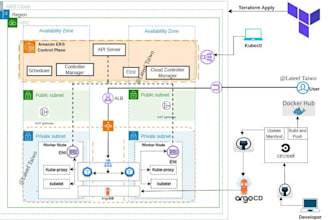

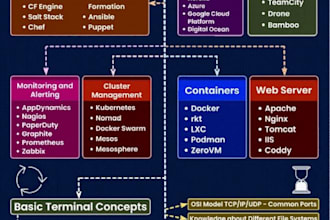







Level 2
I will build and deploy docker containers as an AWS devops expert
Offers video consultations















Cloud Consultation
Cloud consultation services help organizations evaluate their infrastructure needs, select appropriate platforms, and design cost-optimized architectures before implementation begins. This strategic planning phase typically costs between $500 and $2,500 depending on infrastructure complexity and business requirements. Businesses benefit from cloud consultation when transitioning from on-premises infrastructure, evaluating multi-cloud strategies, or optimizing existing cloud spending. Proper consultation early in the process often reduces overall implementation costs by 15 to 25 percent by preventing architectural mistakes and avoiding over-provisioning.
Cloud Management
Ongoing cloud management encompasses resource monitoring, cost optimization, security patching, performance tuning, and capacity planning after initial infrastructure deployment. Monthly cloud management services typically range from $200 to $2,000 depending on infrastructure size and complexity. Organizations handling dynamic workloads, managing dozens of services, or lacking internal cloud expertise find ongoing management services valuable for maintaining optimal performance and controlling costs. This service complements initial DevOps implementation by ensuring infrastructure remains efficient and secure as business needs evolve.
Infrastructure as Code Development
Infrastructure-as-code services transform manual infrastructure provisioning into version-controlled, repeatable automation using tools like Terraform, CloudFormation, or Pulumi. Comprehensive infrastructure-as-code implementations typically cost between $1,500 and $8,000 depending on environment complexity and the number of resources being automated. This investment pays dividends for businesses planning to scale infrastructure, maintain multiple environments, or ensure disaster recovery capabilities. Organizations implementing infrastructure as code reduce provisioning errors, accelerate environment creation, and create infrastructure documentation that serves as both deployment tool and technical reference.
Containerization Services
Containerization involves packaging applications with their dependencies into portable containers, enabling consistent deployment across different environments. Containerizing legacy applications typically costs $600 to $3,000 per application depending on complexity, dependencies, and configuration requirements. Businesses benefit most from containerization when managing multiple deployment environments, scaling applications horizontally, or modernizing legacy systems for cloud deployment. This service often precedes Kubernetes adoption and microservices architecture, providing a foundation for more sophisticated orchestration later.
Server Administration
Traditional server administration covers operating system maintenance, security updates, backup management, and performance monitoring for individual servers. While DevOps practices automate many administrative tasks, certain scenarios still require hands-on server management, typically costing $85 to $150 per month per server for ongoing administration. Organizations running specialized software, maintaining legacy systems, or operating hybrid infrastructure combining cloud and on-premises resources often require server administration alongside DevOps automation. This service becomes particularly important during migration periods when systems transition from manual management to fully automated infrastructure.
Ongoing Costs and Hidden Expenses
Beyond initial implementation, several recurring and unexpected costs affect total DevOps investment over time.
- Cloud infrastructure operating costs typically range from $200 to $5,000 monthly depending on application resource consumption, data transfer volumes, and storage requirements
- Monitoring and logging platform subscriptions add $50 to $500 monthly based on data retention periods and feature requirements
- SSL certificates, domain management, and DNS services contribute $100 to $300 annually
- Tool licensing for CI/CD platforms, container registries, and infrastructure management software ranges from $0 for open-source solutions to $500 monthly for enterprise platforms
- Ongoing optimization and troubleshooting typically requires 5 to 15 hours monthly, costing $400 to $2,250 depending on hourly rates
- Security patches and dependency updates demand regular attention, averaging 3 to 8 hours monthly
- Disaster recovery testing and backup verification should occur quarterly, requiring 4 to 10 hours per session
- Platform upgrades for Kubernetes, CI/CD tools, and infrastructure components occur several times yearly, each requiring 5 to 20 hours of planning and execution
- Documentation updates reflecting infrastructure changes need 2 to 5 hours monthly to remain accurate and useful
- Training for team members on new tools and practices costs $500 to $3,000 per person annually
Frequently Asked Questions
How much does DevOps implementation cost on Fiverr?
DevOps services on Fiverr range from approximately $88 for focused containerization work to $348 for comprehensive full-stack deployment solutions. Entry-level packages covering basic CI/CD pipeline setup or simple cloud resource provisioning typically cost between $88 and $130, suitable for straightforward automation needs. Mid-tier offerings including multi-environment pipelines, infrastructure-as-code implementation, and monitoring configuration generally range from $155 to $200. Premium services encompassing complex Kubernetes orchestration, advanced deployment strategies, compliance controls, and comprehensive consulting often exceed $300. Many professionals bundle related services like security configuration, performance optimization, and documentation, creating packages that deliver complete solutions rather than isolated technical implementations.
What are the typical hourly rates for DevOps professionals?
Hourly rates for DevOps expertise vary considerably based on specialization and experience, ranging from $48 to $200 per hour according to marketplace data. Professionals handling routine tasks like server administration or basic deployment automation typically charge $48 to $60 per hour, appropriate for straightforward implementation work with established patterns. Mid-level specialists working on CI/CD pipeline development, containerization projects, and cloud infrastructure management generally command $40 to $100 per hour, reflecting deeper technical knowledge and problem-solving capabilities. Senior architects and consultants designing multi-cloud strategies, implementing advanced Kubernetes patterns, or providing strategic DevOps transformation guidance charge $100 to $200 per hour, justified by their ability to prevent costly mistakes and accelerate complex initiatives. Hourly pricing becomes most valuable when project scope remains flexible, requirements evolve during implementation, or you need ongoing support rather than one-time delivery.
What is typically included in a basic DevOps package?
Basic DevOps packages generally include containerization of one to three applications using Docker, a fundamental CI/CD pipeline automating build and deployment processes for a single code repository, provisioning of essential cloud resources like compute instances and storage, basic monitoring configuration to track system health, and initial documentation describing the implemented infrastructure. Most packages provide deployment automation to at least one environment, typically staging or production, with straightforward rollback capabilities. Version control integration with GitHub, GitLab, or Bitbucket comes standard, enabling automated triggering of deployment workflows when code changes. Extras and upgrades commonly offered include additional environment configuration (development, testing, staging, production), advanced monitoring with custom dashboards and alerting rules, security scanning integration for vulnerability detection, automated testing frameworks, infrastructure-as-code templates for reproducible deployments, and comprehensive team training sessions. Expanding scope to include multiple applications, sophisticated deployment strategies like blue-green or canary releases, or compliance controls implementation typically increases costs by 40 to 150 percent depending on complexity added.

Related Guides



About the author
Lior IluzVP R&D
Lior Iluz is a VP of R&D at Fiverr, leading cross-organizational engineering efforts across web and mobile platforms. With over a decade of experience spanning Android development, full-stack engineering, and senior R&D leadership, his background centers on building and scaling distributed, event-driven systems and modern cloud-native architectures. His work focuses on technical strategy, team leadership, and delivering resilient, high-impact products at scale.
