Browse categories
English
$
USD
Connect to your AI
Full stack developer for websites, AI chatbots, automation and Shopify
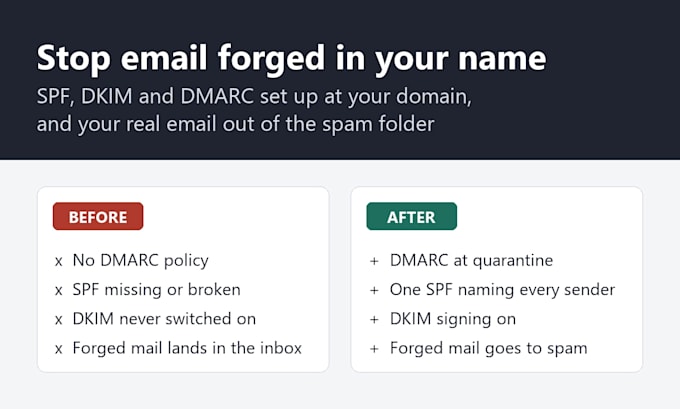
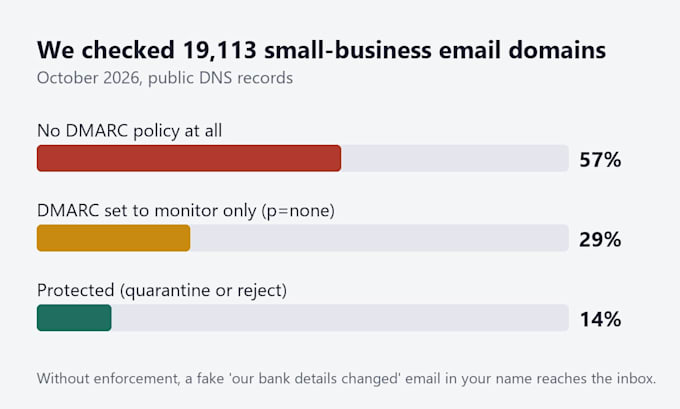
Anyone can send an email that looks like it came from your address unless three short records at your domain say otherwise. In October 2026 I checked 19,113 small-business email domains: 57% had no DMARC policy and 29% only monitored, so 86% would let a fake "our bank details changed" email in their name reach the inbox. Missing records also send your own real email to spam: Gmail and Yahoo require SPF or DKIM from every sender.
What I do:
Works with Google Workspace, Microsoft 365, GoDaddy, Zoho and most hosts; DNS at GoDaddy, Namecheap, Cloudflare, Squarespace and others.
Access: invite me as a helper on your domain account (most offer delegate access). Never send a password in chat.
Disclosure: an AI system I run does the checking and drafts the records, and I am responsible for what is delivered.

Email Provider:
Gmail
•
Yahoo
•
Microsoft Outlook
•
Zoho
•
Webmail
Expertise:
Security
•
Spam
•
Setup
•
Configuration
Will this break my email?
No. DMARC starts at monitor-only and is tightened only once reports show every real sender passing, so your genuine email keeps arriving the whole time.
What do you need from me?
Your domain, your email host and where the domain is managed, plus an invite to that account as a helper. If you know them, list every service that sends email as you. Never a password.
How long until it works?
The records take effect within about an hour. Tightening DMARC to quarantine needs about two weeks of reports, which is what the third package covers.