Browse categories
Explore
Fiverr Pro
English
$
USD
25,000+ results
Top Rated
Offers video consultations
4.9/5
Average rating based on approx. 450K reviews in this category
I carefully read through every manuscript slowly and thoroughly, line by line, ensuring nothing is overlooked.
As a Spanish proofreader, I do it manually by reading the content multiple times, each time focusing on a different aspect—grammar, spelling, and punctuation.
I do almost all my editing on my own, only maybe using "Find and Replace" when I see multiple errors in spelling, for example.
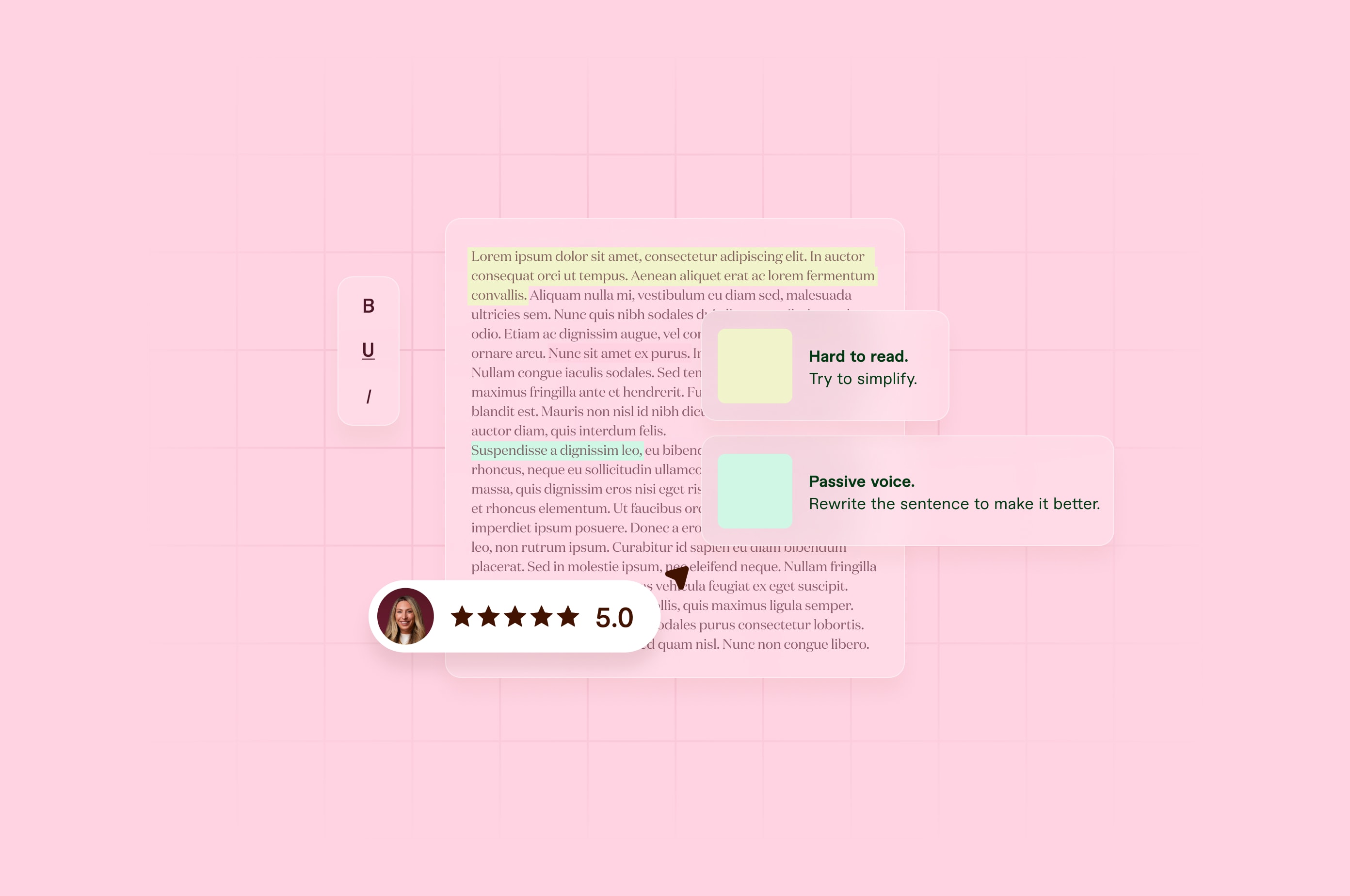
To enhance clarity and engagement, focus on simplifying language, breaking up long sentences, and using active voice.
Editing for readability involves simplifying complex ideas, clarifying jargon, and ensuring the content flows smoothly.
AI platforms like ChatGPT should be used more as brainstorming tools than writing tools.
Articles and Blogposts
Technical Writing
Translation Services
Research and Summaries
Sales Copywriting
Press Release Writing
Transcription
Script Writing
Book Writing
Resume Writing
English proofreading & editing
French proofreading & editing
German proofreading & editing
Italian proofreading & editing
Portuguese proofreading & editing
Spanish proofreading & editing
Personal statement proofreading & editing
Website content proofreading & editing
Article & blog post proofreading and editing
What is the difference between copy-editing and proofreading?
What should I look for in a proofreader or copy-editor?
What does proofreading involve?
Why do I need a proofreader or copy-editor?
Why is proofreading important in translation?
Why is proofreading important in business?