 August 3, 2026
 10 minute reading
Angular continues to dominate the enterprise web development landscape in 2026, powering dynamic single-page applications and complex business platforms across industries. As organizations prioritize responsive, scalable web solutions that deliver seamless user experiences, the demand for skilled Angular specialists has intensified. Companies of all sizes now recognize that investing in quality Angular development translates directly to competitive advantage, improved customer engagement, and long-term technical sustainability.
Understanding what you'll pay for Angular expertise requires examining multiple pricing structures and service models. Based on Fiverr marketplace data, costs vary significantly depending on project complexity, developer experience, and specific deliverables. Whether you need help with component architecture, state management implementation, API integration, or full application builds, pricing typically reflects the technical depth required and turnaround expectations. Throughout this guide, we'll break down the factors that influence Angular developer costs, explore different pricing models, and help you determine which investment level aligns with your project requirements. You can find qualified Angular developers ready to transform your business vision into functional, high-performing web applications.
Average Angular Developer Costs
Based on recent Fiverr marketplace data, Angular development services show considerable range depending on service category and project scope. For consultation and training services, fixed-price projects start around $58, making this an accessible entry point for businesses seeking guidance or team upskilling. Online coding lessons that include custom website development consultation begin at $30 for help sessions, while more comprehensive tutorial packages average $75.
When examining software development services specifically, pricing reflects the technical complexity and deliverable scope. Full stack web applications using Angular typically cost around $278 on a fixed-price basis, while complete software development projects average $378. Custom website builds fall in the $270 to $368 range depending on specific requirements and functionality depth.
For businesses requiring API integrations and backend connectivity, fixed prices average around $198, while plugin development services typically command approximately $208. Figma to web conversions, which often involve translating design files into Angular components, average $122 for standard implementations. Development and MVP services through newer coding platforms show competitive pricing around $197, while deployment and DevOps support averages $189.
Hourly rate structures provide flexibility for ongoing projects or uncertain scope. Angular developers on the platform charge between $7 and $315 per hour depending on expertise level and service category. Entry-level support and basic consultation typically falls in the $7 to $20 range, mid-tier developers with solid portfolios charge $20 to $70 hourly, while senior specialists commanding premium rates may charge $70 to $315 per hour for complex architectural work or enterprise-grade implementations.
Which Pricing Model is Best for You?
Fixed-price packages work exceptionally well when project requirements are clearly defined from the outset. If you need a specific component built, a landing page converted from design files, or a well-scoped feature addition to an existing application, fixed pricing provides cost certainty and clear deliverable expectations. This model suits businesses with detailed specifications, established timelines, and minimal anticipated scope changes.
Hourly arrangements make more sense for exploratory projects, ongoing maintenance relationships, or situations where requirements will evolve through development. When you're refining features based on user feedback, troubleshooting complex issues within legacy codebases, or building applications where functionality will be determined iteratively, hourly billing accommodates necessary flexibility. This approach also benefits longer-term collaborations where developers become familiar with your codebase and business logic over time.
What Influences Angular Development Pricing
Application Complexity and Architecture Requirements
Simple applications with straightforward data flow, minimal state management, and basic routing typically require 15 to 30 development hours and fall within the $200 to $500 range. These projects might include promotional websites with form submissions, simple dashboards with limited interactivity, or basic content management interfaces. Mid-complexity applications incorporating advanced routing, comprehensive state management with NgRx or similar libraries, third-party service integrations, and responsive design across multiple breakpoints generally require 40 to 80 hours, pushing costs into the $800 to $2,000 territory. Enterprise-grade applications featuring complex business logic, real-time data synchronization, extensive security implementations, role-based access control, and sophisticated testing coverage can easily exceed 100 development hours, with costs ranging from $2,500 to $8,000 or higher depending on specific architectural demands.

Developer Experience and Specialization Depth
Junior developers with one to two years of Angular experience typically charge $15 to $30 hourly and handle standard implementations effectively, though they may require more time for complex problem-solving or architectural decisions. Mid-level developers with three to five years of framework expertise command $35 to $70 hourly, bringing efficiency gains through pattern recognition and reduced debugging time. Senior specialists with comprehensive Angular knowledge, including performance optimization techniques, advanced RxJS implementations, and enterprise architecture patterns, justify rates of $75 to $150 hourly through faster delivery, better code quality, and strategic technical guidance that prevents costly refactoring later.
Integration and Backend Connectivity Needs
Projects requiring simple REST API consumption with standard HTTP methods and basic error handling add minimal complexity, typically 5 to 10 hours of integration work costing $100 to $300. More sophisticated scenarios involving GraphQL implementations, WebSocket connections for real-time features, OAuth authentication flows, or complex data transformation between backend formats and frontend models require 15 to 30 additional hours, adding $400 to $1,200 to project costs. Applications demanding multiple third-party service integrations, payment gateway implementations, or custom API development alongside Angular work can easily double overall project investment.
Testing Requirements and Quality Assurance
Basic manual testing and developer-executed quality checks represent the minimum standard included in most quotes. Comprehensive unit testing coverage for components, services, and utilities typically adds 20 to 30 percent to development time and costs. End-to-end testing implementation using frameworks like Cypress or Protractor, integration testing for complex user workflows, and performance testing to ensure load time benchmarks can collectively add 30 to 50 percent to total project investment, though this upfront expense prevents expensive post-launch issues and maintenance costs.
Timeline Urgency and Delivery Speed
Standard delivery timelines matching developer availability and reasonable workload distribution maintain base pricing levels. Projects requiring completion within accelerated timeframes, such as two-week turnarounds for work that would normally span four weeks, typically incur 25 to 50 percent premium pricing to compensate for schedule disruption, overtime work, and opportunity cost. Rush requests demanding delivery within days rather than weeks can command premium multipliers of 75 to 100 percent, though quality may suffer unless the developer has immediate availability and the scope remains genuinely manageable within compressed timelines.
Angular Development Costs by Project Scope
Understanding pricing through common project categories helps establish realistic budget expectations for different Angular development needs.
Basic Component Development and Bug Fixes
- Individual component creation, styling adjustments, minor functionality additions, or isolated bug repairs
- Typical investment ranges from $50 to $200 depending on component complexity
- Best suited for businesses with existing Angular applications needing targeted enhancements or maintenance support
Feature Module Implementation
- Complete feature modules including multiple components, routing configuration, service layer development, and basic state management
- Projects typically cost between $300 and $1,200 depending on feature scope and integration requirements
- Ideal for organizations expanding existing applications with substantial new functionality like user dashboards, reporting modules, or administrative interfaces
Full Application Development
- Complete application builds from initial architecture through deployment, including comprehensive routing, state management, API integration, responsive design, and testing coverage
- Investment generally ranges from $1,500 to $5,000 for small to medium applications, with larger enterprise solutions exceeding $8,000
- Appropriate for businesses launching new products, replacing legacy systems, or building customer-facing platforms requiring professional architecture and scalability
Consultation and Code Review Services
- Architecture planning sessions, code quality audits, performance optimization recommendations, or team training on Angular best practices
- Hourly consultation typically costs $30 to $100 depending on specialist expertise, with comprehensive audits ranging from $200 to $800
- Valuable for development teams seeking validation of architectural approaches, identification of technical debt, or skill development for internal developers
Migration and Upgrade Projects
- AngularJS to modern Angular migrations, version upgrades across major releases, or framework transitions from other libraries to Angular
- Costs vary dramatically based on application size but typically range from $800 for small applications to $5,000-plus for complex enterprise systems
- Essential for organizations maintaining legacy applications that require modernization for security, performance, or continued vendor support
Related Angular Service Costs

Vetted Pro
Our agency will develop a website using angular, react, and laravel
Offers video consultations




Level 2
I will be your full stack developer for mern, next js, angular, spring boot and nest js
Offers video consultations









Level 2
I will develop CRM ai automation system and saas web app using next js react js angular
Offers video consultations

Vetted Pro
I will do a custom full stack website development with angular, node js and mongodb
Offers video consultations





























Level 2
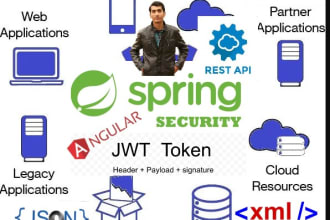
I will do microservice, saas product, rest service, as spring, angular, java developer
Offers video consultations























TypeScript Development and Configuration
While Angular inherently uses TypeScript, some projects require advanced TypeScript configuration, custom type definitions for third-party libraries, or complex generic implementations. These specialized TypeScript services typically add $100 to $500 to project costs depending on configuration complexity. Businesses benefit from this investment when working with specialized libraries, implementing type-safe state management patterns, or ensuring comprehensive compile-time error detection across large codebases.
UI Component Library Implementation
Integrating established component libraries like Angular Material, PrimeNG, or custom design systems requires configuration expertise and often customization to match brand guidelines. Implementation costs generally range from $200 to $800 depending on customization depth and the number of components utilized. Organizations pursuing consistent user experiences across multiple applications or requiring accessibility-compliant interfaces find this investment valuable for accelerating development while maintaining design coherence. Exploring broader website development options can provide additional context for comprehensive project planning.
Progressive Web App (PWA) Conversion
Transforming standard Angular applications into Progressive Web Apps involves service worker implementation, offline functionality configuration, and app manifest creation. These enhancements typically cost between $300 and $1,000 depending on offline capability requirements and caching strategies. Businesses targeting mobile users without native app development investments or seeking improved performance through caching strategies benefit significantly from PWA implementations.
Performance Optimization Services
Dedicated performance audits and optimization work including bundle size reduction, lazy loading implementation, change detection optimization, and rendering performance improvements typically range from $400 to $1,500. Organizations experiencing slow application performance, high bounce rates, or user complaints about responsiveness achieve measurable ROI through these focused optimization engagements. For teams needing ongoing guidance, help and consultation services provide valuable support throughout development cycles.
Internationalization and Localization
Implementing multi-language support through Angular's i18n features, managing translation files, and configuring locale-specific formatting for dates, currencies, and numbers generally costs $300 to $1,200 depending on the number of supported languages and content volume. Companies serving global markets or planning international expansion require this foundational work before entering new geographical regions.
State Management Implementation
Sophisticated state management using NgRx, Akita, or similar libraries involves architectural planning, action and reducer development, effects implementation for side effect management, and selector creation for efficient data access. Comprehensive implementations range from $500 to $2,000 depending on application complexity and state management scope. Organizations building applications with complex data flows, multiple user roles affecting data visibility, or requirements for time-travel debugging capabilities benefit from professional state management architecture. Those exploring comprehensive technical solutions can review programming and tech services for additional development support.
Automated Testing Infrastructure
Establishing comprehensive testing infrastructure beyond basic unit tests, including end-to-end test suites, continuous integration pipeline configuration, code coverage reporting, and testing best practices documentation typically costs $600 to $2,500. Development teams committed to long-term code quality, organizations with regulatory compliance requirements, or businesses managing mission-critical applications justify this investment through reduced bug rates and maintenance costs.
Ongoing Costs and Hidden Expenses
Beyond initial development investment, Angular projects incur ongoing expenses that affect total cost of ownership. Planning for these recurring costs prevents budget surprises and ensures sustainable application maintenance.
- Framework version upgrades typically required annually or semi-annually to maintain security and access new features, costing $200 to $1,000 depending on application size and breaking changes between versions
- Dependency updates for third-party libraries and security patches requiring testing and occasional code adjustments, averaging $100 to $400 quarterly for active applications
- Performance monitoring and optimization as user bases grow and new features increase application complexity, with periodic optimization engagements costing $300 to $800
- Bug fixes and minor enhancements arising from user feedback or changing business requirements, typically manageable through monthly retainers of $200 to $800 or hourly arrangements
- Hosting and infrastructure costs for application deployment, API backends, and database services, ranging from $20 monthly for small applications to several hundred dollars for high-traffic enterprise systems
- Content Delivery Network (CDN) fees for optimized global content delivery and improved loading times, typically $10 to $100 monthly depending on traffic volume
- SSL certificates and security scanning services ensuring data protection and regulatory compliance, averaging $50 to $200 annually
- Analytics and monitoring tool subscriptions providing performance insights and error tracking, costing $0 to $200 monthly based on traffic levels and feature requirements
Frequently Asked Questions
How much does Angular development cost on Fiverr?
Angular development services on the platform range from $30 for basic consultation and help sessions to $378 for comprehensive software development projects. Most web application builds fall between $200 and $350 for standard implementations, while specialized services like API integrations average around $198 and plugin development approximately $208. Entry-level packages including simple component work or minor enhancements start near $50, making Angular development accessible across various budget levels. Premium offerings incorporating complex state management, extensive testing, performance optimization, and architectural consultation command higher investments, particularly when delivered by senior specialists with proven enterprise experience.
What are typical hourly rates for Angular developers?
Hourly rates for Angular developers span from $7 to $315 depending primarily on experience level and service complexity. Developers offering basic support, tutorial services, or junior-level implementation typically charge $7 to $20 per hour, providing cost-effective solutions for straightforward projects with well-defined requirements. Mid-tier developers with solid portfolios and three to five years of framework expertise generally charge $45 to $70 hourly, balancing cost efficiency with technical capability for most standard business applications. Senior specialists commanding $75 to $315 per hour bring advanced expertise in performance optimization, complex architectural patterns, enterprise-scale implementations, and strategic technical guidance. Hourly pricing proves most valuable for ongoing maintenance relationships, projects with evolving requirements, troubleshooting complex technical issues, or situations where scope cannot be precisely defined upfront.
What is typically included in a basic Angular development package?
Basic Angular packages generally include component development for specified functionality, basic styling to match provided design guidelines, integration with existing APIs or backend services, fundamental responsive design ensuring mobile compatibility, and standard testing to verify functionality works as expected. Most entry-level offerings cover initial consultation to clarify requirements, development of the agreed scope, one or two revision rounds to address feedback, and basic documentation explaining implemented features. Packages typically exclude advanced features like comprehensive state management implementation, extensive automated testing coverage, performance optimization beyond standard practices, custom animation development, or ongoing maintenance after delivery. Upgrades commonly offered include additional revision rounds, expanded testing coverage, performance optimization work, accessibility compliance enhancements, deployment assistance, and post-launch support periods. Scope expansion significantly affects final costs, with each substantial addition potentially increasing investment by 20 to 50 percent depending on complexity.

Related Guides



About the author
Dolev GamzoR&D Director
Dolev Gamzo is a Director of R&D at Fiverr, where he leads engineering groups and the Fiverr AI Guild. With 12+ years of experience in building software, he spent 5 years managing Fiverr’s payment and financial systems before shifting his focus to Fiverr's inbox moderation framework and order framework. In his free time, Dolev explores nature and spends time with his three children.
