 August 3, 2026
Upwork is often the first platform businesses try when hiring freelancers, thanks to its scale and wide range of services. But size doesn’t always equal simplicity.
Between rising fees, proposal overload, and the effort required to vet candidates, many teams find themselves spending more time managing the hiring process than moving work forward. For companies with tight timelines or specific quality standards, that friction adds up quickly.
This guide explores the best Upwork alternatives in 2026, highlighting platforms that offer clearer pricing, faster access to talent, and hiring models better suited to modern teams.
Why Look for Upwork Alternatives?
Upwork is one of the largest freelance marketplaces in the world, connecting businesses with millions of freelancers across nearly every service category, including graphic design, programming, digital marketing, and finance. Its scale makes it an obvious starting point for many companies. But that same openness can create challenges as hiring needs become more complex or time sensitive.
For teams looking to move quickly, maintain consistent quality, or reduce the overhead of managing freelance work, Upwork’s marketplace model is not always the most efficient option.
Common Pain Points with Upwork
Here are some of the common issues with using Upwork:
Proposal overload and time drain
Upwork’s open bidding system often results in dozens or even hundreds of proposals for a single job. While choice can be helpful, reviewing applications, screening candidates, and conducting interviews takes significant time. For lean teams or fast-moving projects, this process can slow work rather than accelerate it.
Inconsistent talent quality
Because Upwork is open to freelancers at every experience level, quality varies widely. Strong professionals do exist on the platform, but finding them often requires extensive vetting, test projects, and back-and-forth communication. This puts the burden of quality control entirely on the client.
Platform fees that add up
Upwork charges service fees that can significantly increase total project costs, especially for long-term or higher-value engagements. When combined with hourly billing and extended timelines, budgets can escalate quickly, often without a clear sense of final cost upfront.
Limited support for structured team hiring
Upwork works well for individual hires, but managing multiple freelancers across teams or departments can feel fragmented. Collaboration, oversight, and consistency become harder as projects scale.
What Users Typically Seek in Alternatives
Most businesses exploring Upwork alternatives are not trying to replace freelancers. They are trying to hire more efficiently. They want faster access to qualified professionals, clearer pricing, and less time spent managing the hiring process.
Many also prefer platforms that allow them to start with defined deliverables instead of open-ended hourly contracts. Others look for better vetting, curated talent pools, or hiring models that support collaboration across teams rather than one-off engagements.
Benefits of Exploring Other Freelance Platforms
Alternative platforms can remove much of the friction that comes with open marketplaces. Many offer pre-packaged services, upfront pricing, or curated talent, allowing teams to start work within hours instead of weeks.
In many cases, businesses find experienced professionals at more predictable price points, along with tools that support team collaboration, payment protection, and ongoing project management. Rather than sorting through endless proposals, clients can focus on outcomes and choose the platform that best matches their budget, timeline, and quality expectations.
The reality is that most projects do not require an open bidding war to succeed. Exploring Upwork alternatives gives businesses more control over how they hire, collaborate, and scale freelance work without sacrificing quality.
How to Choose the Right Freelance Platform
Choosing a freelance platform is really about reducing friction. The goal is to spend less time hiring and managing work and more time getting results. A few key considerations can help narrow the field quickly.
Start with your budget range
Define what you can realistically spend before browsing platforms. Some marketplaces are optimized for smaller, fixed-scope projects, while others assume higher hourly rates and longer engagements. Be sure to account for platform fees, payment processing, and potential revisions so you understand the true cost of a project from start to finish.
Align the platform with your project scope
Well-defined tasks with clear outputs often work best on platforms that support fixed pricing or pre-scoped services. More complex work that evolves over time may require platforms designed for ongoing collaboration, senior expertise, or long-term contracts. Matching the platform to your project's structure can prevent scope creep and delays.
Factor in hiring speed and internal capacity
Some platforms let you hire within hours, while others require posting jobs, reviewing proposals, and running interviews. If your team has limited time to manage hiring, faster, more curated platforms can be a better fit. If you have the capacity to screen candidates, open marketplaces offer a broader choice at the cost of time.
Evaluate how talent is vetted
Different platforms handle talent quality differently. Open marketplaces rely on ratings and reviews, which puts the burden of vetting on the client. Fiverr combines transparent performance data, reviews, completion rates, seller levels, with Fiverr Pro’s manual vetting process for businesses that want an additional layer of assurance. Understanding how a platform screens and surfaces talent helps set realistic expectations before you commit.
Confirm service coverage and flexibility
Not all platforms are strong across every category. Some excel in technical roles, while others shine in creative, marketing, or operational work. Look for platforms that support both your immediate needs and potential future projects, so you are not forced to switch tools midstream.
Think about collaboration and scalability
If you plan to work with multiple freelancers or involve several stakeholders, team features matter. Shared access, centralized communication, and clear project visibility can make a significant difference as freelance work scales beyond a single hire.
Balance quality expectations with cost
Hiring the most senior freelancer available is not always necessary. Define what level of experience is required to meet your goals, then choose a platform that consistently delivers talent at that level without inflating costs.
Taking time to choose the right platform upfront can reduce rework, speed up delivery, and make freelance hiring a repeatable part of how your team operates.
Quick Comparison: Top 5 Sites Like Upwork
If Upwork is not quite the right fit, these platforms stand out depending on what you need most. Each one solves a slightly different hiring problem.
- Best overall: Fiverr delivers the strongest balance of quality, speed, and price across hundreds of service categories. Fiverr Pro adds vetted talent, team workflows, and buyer protections without enterprise pricing.
- Best for complex projects: For companies that need senior-level specialists in a narrow set of disciplines, Toptal offers concierge-style matching at premium rates.
- Best for budget-driven work: Freelancer.com focuses on competitive bidding and contests for cost-conscious projects.
- Best for payment flexibility: Guru supports multiple payment models and structured collaboration without premium pricing.
- Best for European talent: PeoplePerHour connects businesses with UK- and EU-based freelancers through fixed-price and proposal-based hiring.
Here’s a quick look at how each platform compares:
| Platform | What it's best at | Typical pricing | Key strengths | Pros | Cons | Best for |
|---|---|---|---|---|---|---|
| Fiverr | Fast, fixed-price freelance services across nearly every category | Flexible pricing across project scopes; buyer processing fee of 5.5% | Broad service coverage, flexible hiring models, fast delivery | Transparent, upfront pricing with flexible tiers to match project scope and budget. Fiverr Pro offers vetted talent, team accounts, and a money-back guarantee. | Self-serve by design, teams that prefer managed sourcing can upgrade to Fiverr Pro for expert shortlisting and structured support. | Well-defined projects where speed, price clarity, and flexibility matter |
| TopTal | High-end freelance talent for complex, specialized work | $60–$200+ per hour | Concierge matching, elite vetting, senior expertise | High-quality talent. Reduced screening effort for clients. | Premium pricing. Limited service categories. Longer hiring timelines. | Companies needing senior-level specialists and willing to pay for them |
| Freelancer.com | Budget-focused projects and creative contests | $10–$75 per hour or $100–$1,000 fixed | Competitive bidding, global reach, contest model | Lowest potential costs. Works well for exploratory design. | Inconsistent quality. High proposal volume. | Cost-driven or exploratory projects |
| Guru | Flexible payments and structured collaboration | $20–$85 per hour | Multiple payment options, WorkRooms, SafePay | More flexibility than Toptal. Mid-range pricing. | Smaller talent pool. Interface feels dated. | Clients wanting flexibility without enterprise pricing |
| PeoplePerHour | European freelance talent and hybrid hiring | $25–$90 per hour or $50–$500 fixed | Hourlies, proposal-based hiring, EU focus | Strong UK and EU talent. Reasonable pricing. | Smaller reach outside Europe. | European businesses or region-specific hiring |
Best Upwork Alternatives: In-Depth Review
1. Fiverr

Fiverr
Fiverr changes the hiring experience by flipping the model from “post a job and wait” to “shop for outcomes.” Instead of writing a job description, collecting proposals, and negotiating hourly rates, you can browse ready-to-buy services with clear deliverables, timelines, and pricing. For teams that want momentum fast, this is the big win. You pick what you need, choose a package, and start work right away.
Just as important, Fiverr is built for more than dev and design. You can hire across writing and editing, SEO and content strategy, paid social, email marketing, branding, video editing, motion graphics, voiceover, podcasts, presentations, data work, consulting, and dozens of business services. That breadth matters for real projects, because most initiatives need more than one skill set. A product launch might require landing page copy, ad creative, a promo video, and design updates. Fiverr makes it easy to build that “mini team” without switching platforms.
Even in areas where premium platforms dominate the conversation, Fiverr often gives you a more predictable cost structure. Many services are offered as fixed-price projects, so you can scope work around a defined output rather than watching hours climb. You can still hire for larger builds, but the default is clarity. What you get, when you get it, and what it costs.
Where Fiverr Pro shines for businesses
Fiverr Pro is the version of Fiverr built for companies that want premium work with less guesswork. Pro sellers go through a vetting process, and the catalog is designed to make it easier to hire experienced professionals without sorting through as much noise.
The biggest difference is that Fiverr Pro is not just about “better freelancers.” It’s also about how the buying experience supports real teams.
Key Features
Gig-based marketplace with clear deliverables
Upfront pricing with tiered packages
500+ service categories
Fiverr Pro for vetted, professional talent
Team accounts with unlimited members
Fast turnaround, often within days
Escrow-based payment protection
Pricing Structure
Buyer processing fee: 5.5% per order
Freelancer service fee: 20% of earnings (freelancer keeps 80%)
Typical project costs: $50–$800+, higher for complex work
Pros
Fast hiring and clear pricing
Massive variety of service categories
Fiverr Pro offers vetted quality without enterprise pricing
Team collaboration tools and buyer protections
Great for defined deliverables and quick turnaround
Best For
Teams and businesses that want predictable costs, fast delivery, and quality talent across nearly any category.
2. Toptal
TopTal
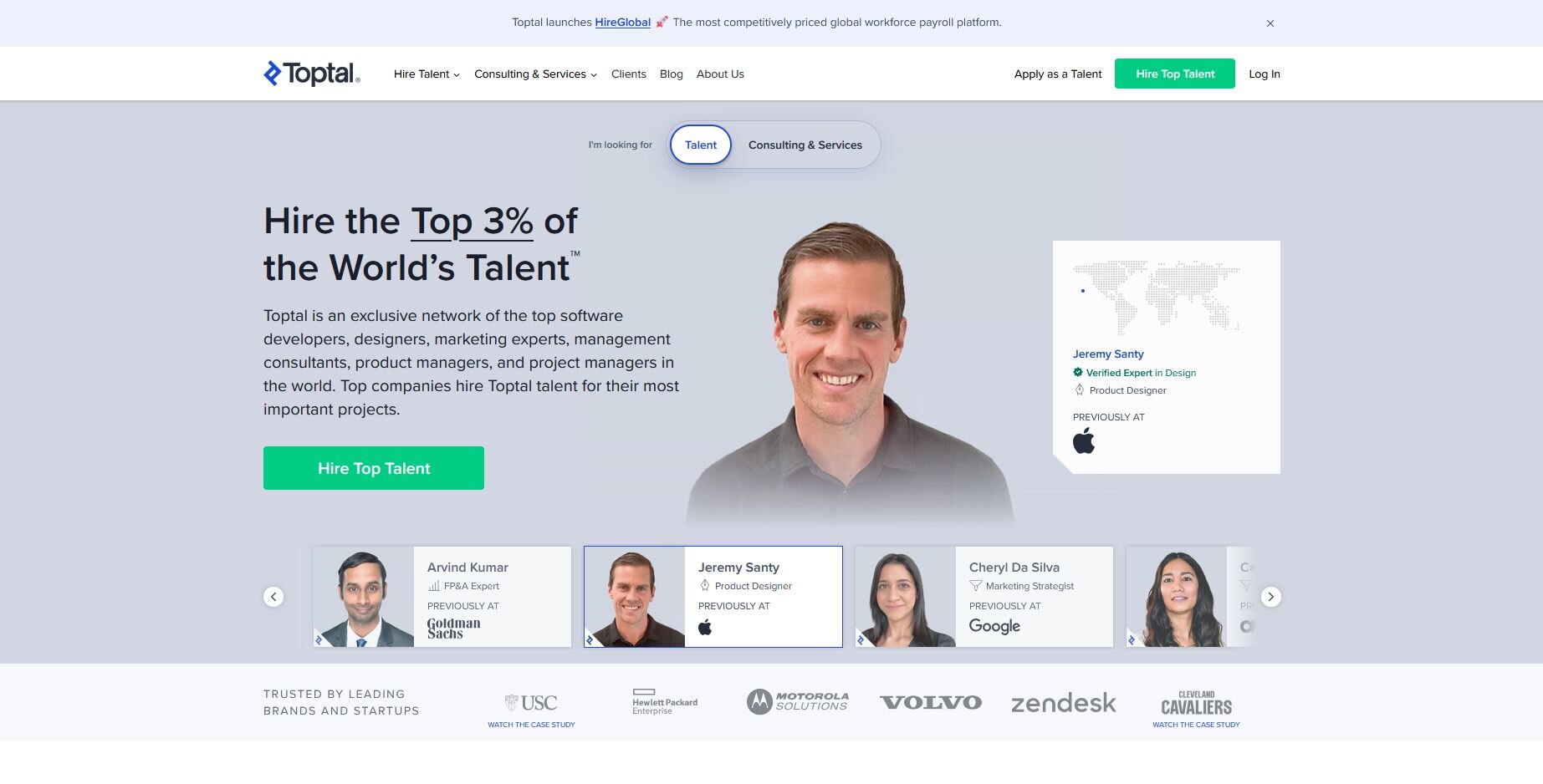
Toptal focuses on connecting companies with a curated pool of freelancers, primarily in development, design, finance, and product leadership. The platform emphasizes quality over volume, positioning itself as a premium solution for complex or high-stakes work.
Unlike Upwork’s open marketplace, Toptal uses a concierge matching process. Clients submit requirements, review curated candidates, and move through interviews and trial periods. While this process can deliver exceptional talent, it typically takes longer and costs more.
Key Features
Pre-vetted, elite freelance talent
Concierge matching support
Focused expertise (tech, design, finance, AI services)
Trial engagement before full launch
Pricing Structure
Hourly rates often start around $60+ and can exceed $200/hour depending on role and specialization
Pros
Top-tier vetted talent
High professionalism and depth of expertise
Concierge support reduces search burden
Cons
High pricing limits accessibility
Narrow service categories
Longer matching timeline
Best For
Enterprises or high-budget teams that need senior-level expertise and have flexibility in hiring timelines.
3. Guru
Guru
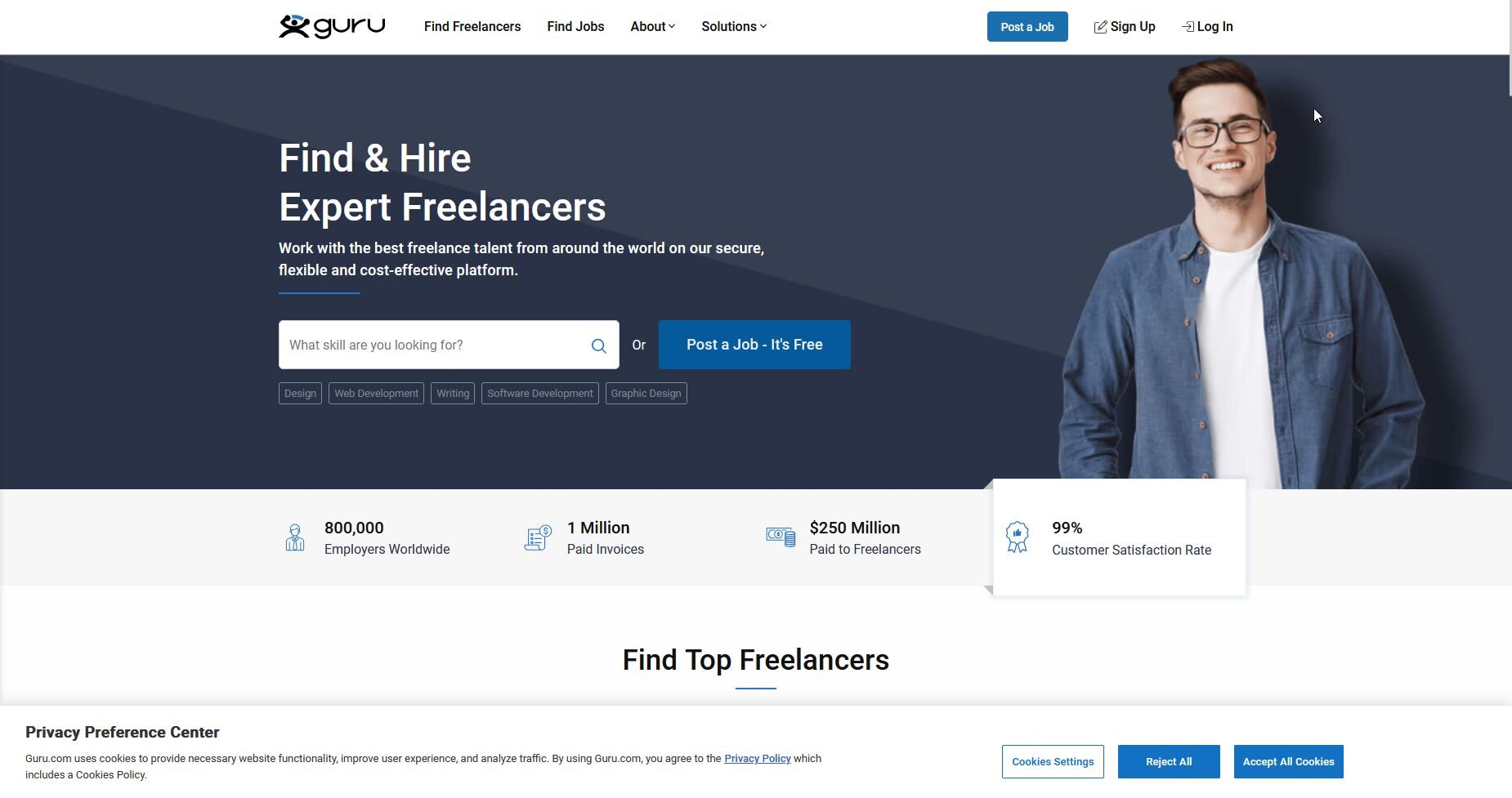
Guru is a traditional freelance marketplace that blends job postings with profile-based hiring. Clients post openings, review freelancer profiles and work histories, and negotiate terms. While the workflow feels familiar, it’s less streamlined than gig-based systems.
The platform supports a wide range of categories and offers flexibility in contract types, making it a decent option for longer-term engagements or collaborations that evolve over time.
Key Features
Job posting and profile browsing
Multiple contracts and payment types
Workroom for collaboration
Escrow-based payment protection
Pricing Structure
Buyer payment processing fee: 2.9%–9% depending on billing method
Freelancer service fee: 8.95% of earnings
Rates vary widely: $15–$100+ per hour or fixed-price
Pros
Flexible contracts and payment options
Escrow protection
Cons
Less curated than some alternatives
Still requires manual vetting
Interface can feel dated
Best For
Businesses that want flexibility in engagement structure and are comfortable managing candidate selection and vetting.
4. Freelancer.com

Freelancer.com
Freelancer.com operates as a competitive bidding platform, where freelancers submit proposals and clients choose based on price, experience, or delivery estimates. Its broad global pool covers nearly every service category, but price-driven bidding can favor cost over quality.
The platform offers milestone payments and dispute support through escrow, but managing high proposal volume and inconsistent quality can be time-intensive.
Key Features
Competitive bidding marketplace
Large global talent base
Fixed-price and hourly contracts
Milestone-based escrow
Pricing Structure
Project fee: 3% or $3 (whichever is greater) on fixed-price projects
Hourly project fee: 3%
Freelancer membership plans are available for added visibility
Pros
Broad range of services
Milestone payment options
Cons
Quality varies significantly
High proposal volume can be overwhelming
Less curated talent pool
Best For
Projects that prioritize cost and volume, or businesses prepared to invest time in vetting.
5. PeoplePerHour
PeoplePerHour
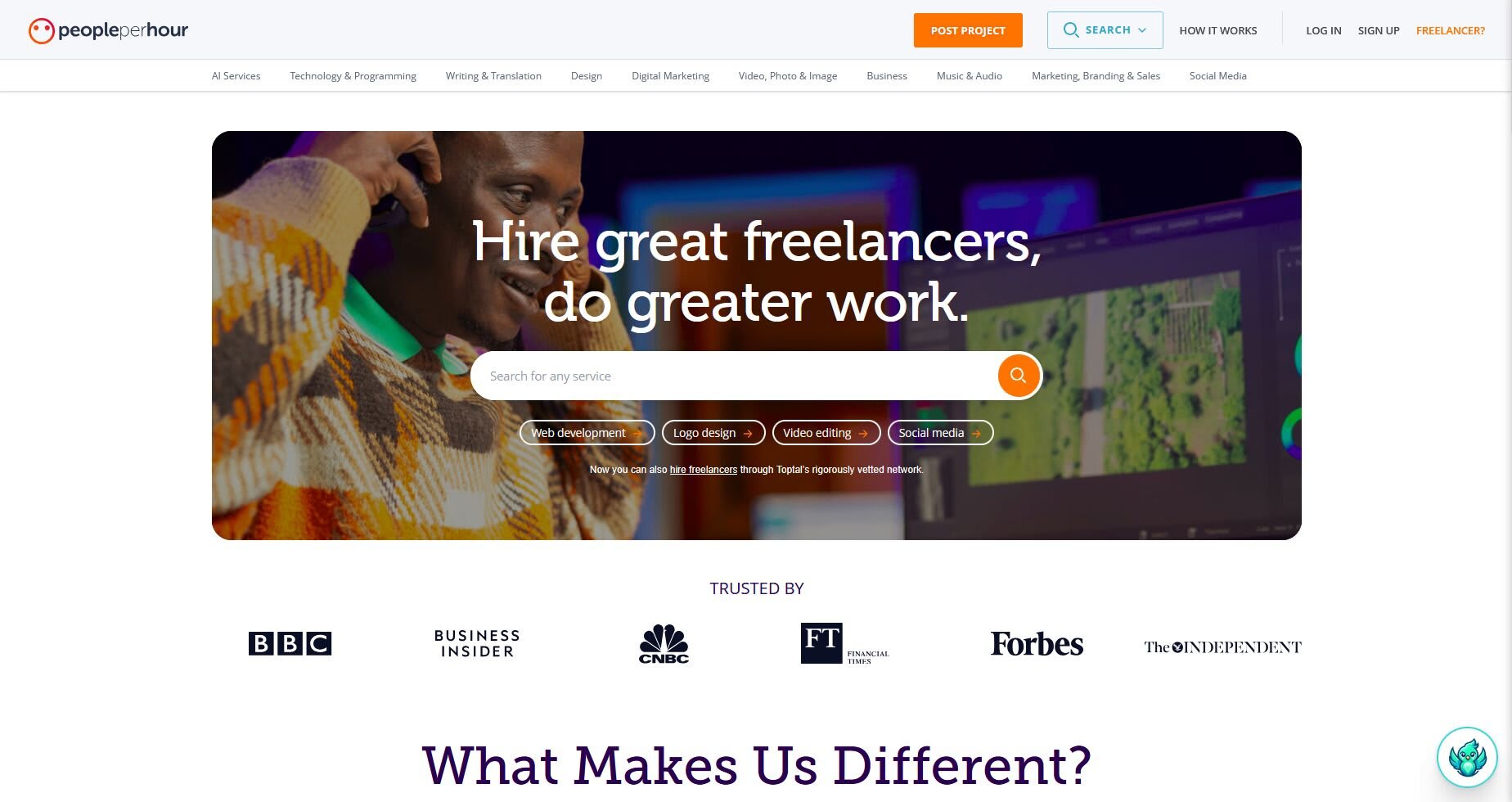
PeoplePerHour combines elements of fixed-price offers and proposal-based hiring. Clients can browse “Hourlies” (pre-packaged services) or post projects for custom proposals. The platform is particularly popular with creative and marketing freelancers and has strong representation from the UK and Europe.
While its pool isn’t as deep as Upwork’s, PeoplePerHour provides a middle ground between structured gigs and traditional job postings.
Key Features
Browse fixed-price offerings
Post projects for proposals
Escrow payment protection
Curated freelancer profiles
Pricing Structure
Buyer service fee: 3.5%–5%
Freelancer service fee: 20% on earnings up to £250; 7.5% up to £5,000; 3.5% above that
Rates range by skills: $20–$120+ typical
Pros
Mix of quick gigs and custom hiring
Escrow protection
Strong in creative categories
Cons
Smaller talent pool than Fiverr
Quality varies outside curated sellers
Less focus on team workflows
Best For
Small to mid-sized projects in creative, design, and marketing categories, especially for European clients.
Which Freelance Platform Should You Choose?

Fiverr or Upwork?
Different freelance platforms solve different problems. The right choice depends on your budget, timeline, and how structured your work is. Here’s a practical way to match your needs to the platform that fits best.
Choose Fiverr when:
- Budget clarity matters. You want quality work at transparent, upfront pricing without the unpredictability of open bidding or hourly escalation.
- Speed is a priority. You need work started and delivered in days, not weeks.
- You want plug-and-play services. Browsing pre-packaged offerings is easier than posting jobs and reviewing proposals.
- Your scope is clear. The project has defined deliverables and timelines.
- You need non-technical talent. Writing, marketing, video, branding, operations, or business support are part of the mix.
- Pricing clarity matters. You want to know the full cost upfront with no negotiation.
- You want a business-ready option. Fiverr Pro adds vetted talent, team accounts, and a money-back guarantee for higher-impact work.
Choose Toptal when:
- Senior expertise is non-negotiable. You need highly experienced specialists in development, finance, or product leadership.
- The project is complex or strategic. Long-term, high-stakes work justifies a premium approach.
- You value concierge-style matching. You prefer candidates to be shortlisted for you.
- Budget is flexible. Higher hourly rates are acceptable for depth of experience.
- Hiring speed is less urgent. You can accommodate a longer matching and onboarding process.
Choose Freelancer.com when:
- Cost is the top driver. You want the lowest possible rates.
- You want options to compare. Design contests or competitive bidding help you review multiple submissions.
- You have time. Sorting through bids and proposals is manageable.
- Value hunting is worth it. You are willing to vet extensively to find the right fit.
- Price outweighs convenience. Speed and curation matter less than cost savings.
Choose Guru when:
- Payment structure matters. You need flexibility beyond basic hourly or fixed-price contracts.
- You want continuity. Long-term freelancer relationships are part of the plan.
- Collaboration is central. Shared tools and ongoing coordination are important.
- You want balance. Mid-range pricing between budget and premium platforms works best.
- Cash flow matters. Payment timing and structure affect how you operate.
Choose PeoplePerHour when:
- You are Europe-based. Access to UK and EU freelancers is a priority.
- You want format flexibility. A mix of fixed-price services and custom proposals fits your workflow.
- Time zones matter. Regional alignment improves collaboration.
- Pricing needs to stay reasonable. You want accessible costs with buyer protection.
- Your work is creative or technical. Marketing, web design, and web development are core needs.
- For most teams, the decision comes down to trade-offs. If you want speed, clarity, and flexibility across many types of work, Fiverr (especially Fiverr Pro) is usually the best fit. If you need deeply specialized talent and can support premium pricing, Toptal may make sense. The others fill specific gaps depending on cost sensitivity, payment needs, or regional focus.
Reality Check on Upwork
Upwork is one of the most recognizable freelance platforms, largely because of its size. It gives you access to a massive global talent pool across almost every category. That reach can be useful, but it also comes with tradeoffs.
Quality on Upwork varies widely. Strong professionals are there, but finding them usually requires reviewing large volumes of proposals, interviewing candidates, and running test projects. The platform does not do much filtering for you, so the screening work sits with the client.
The hiring process also takes time. You post a job, wait for bids, compare options, negotiate terms, and manage scope closely. This flexibility works well for ongoing relationships, but it is slower and less predictable than fixed-price or pre-scoped services.
Upwork makes the most sense when you want long-term freelance support and are comfortable managing hiring and quality yourself. It is less efficient when speed, upfront pricing, or reduced screening effort are priorities.
How to Get Started on Fiverr
Getting started on Fiverr is quick and practical. You can move from idea to active project in a single session, without the long matching cycles or hourly negotiations common on premium platforms.
Set up your account
Create an account using email or Google, then add basic business details and a payment method. Fiverr supports credit cards, PayPal, and other options depending on your location. If you are working with teammates, you can also set up a team account so multiple stakeholders can collaborate from the start.
Find the right service
Use search or browse categories to locate what you need. Fiverr covers everything from development and design to writing, marketing, video, data, and business services. Filters help narrow options by budget, delivery time, seller level, language, and ratings so you are not starting from scratch.
Evaluate scope and pricing
Each service page lays out exactly what is included, how long delivery takes, and what revisions are offered. This makes it easier to compare options and understand total cost before committing. Fixed pricing also helps avoid surprises when timelines or scope change.
Review sellers carefully
Look beyond star ratings. Check recent reviews, completion rates, response times, and portfolio samples that match your project type. For higher-impact or business-critical work, Fiverr Pro sellers offer an added layer of vetting and consistency.
Ask questions before you order
Use Fiverr’s messaging system to confirm details. Clarify deliverables, timelines, and edge cases so expectations are aligned. Many sellers also offer custom offers if your project does not fit neatly into an existing package.
Place the order and share details
Select the package that fits your needs and provide clear instructions, assets, and examples. The more specific you are upfront, the smoother the project runs. Payments are held in escrow until work is delivered and approved.
Collaborate, review, and finalize
Communicate directly with the seller as work progresses. Review drafts, request revisions within scope if needed, and approve delivery when satisfied. If something goes wrong, Fiverr’s resolution process and, for Pro orders, the money-back guarantee provide added protection.
Tips for getting better results on Fiverr
Here are some ideas to really get the most out of your Fiverr membership:
- Start with a small project to test fit before scaling up
- Use milestones or phased work for larger projects
- Choose Fiverr Pro when quality, reliability, or team coordination matter most
- Read reviews tied to similar projects, not just overall ratings
- Be explicit about success criteria and timelines from day one
Fiverr works best when you treat it as an outcomes platform. Clear deliverables, defined timelines, and the right seller choice make it easy to get professional results without enterprise overhead.
Final Thoughts: Fiverr Is Your Ideal Upwork Alternative
For many teams, the biggest challenge with freelance hiring is not finding talent. It is the time and effort spent managing the process. Posting jobs, reviewing proposals, negotiating scope, and tracking hourly work can slow projects down before they even start.
Fiverr takes a different approach. By centering hiring around pre-packaged services with clear deliverables and upfront pricing, it removes much of that friction. You can see exactly what you are buying, how long it will take, and what it costs before committing. That clarity makes Fiverr easier to use, faster to start, and more predictable for real-world projects.
What truly sets Fiverr apart is its breadth and flexibility. You can hire across hundreds of categories, build small cross-functional teams in one place, and scale work without switching platforms. For businesses that need professional results without enterprise overhead, Fiverr Pro adds vetted talent, team collaboration tools, and a money-back guarantee that reduces risk on higher-impact work.
Most successful projects do not require open bidding or ongoing negotiations. They require clear scope, capable professionals, and momentum. Fiverr supports that reality better than traditional freelance marketplaces.
If you want a simpler, faster way to work with freelancers, Fiverr is the most practical alternative. Browse services, compare transparent pricing, and start projects immediately with professionals who are ready to deliver.
Upwork Alternatives FAQ
1. Which Upwork alternative is best for small businesses?
For small businesses, Fiverr offers strong advantages through Fiverr Pro, which provides access to vetted, top-tier freelancers. Small businesses benefit from flexible payment options (hourly or project-based), team collaboration features that allow multiple freelancers to work together on a single project, and a curated selection process that reduces time spent on hiring.
This streamlined approach helps small businesses focus on their work rather than vetting candidates.
2. Which Upwork alternative offers the fastest hiring process?
Fiverr enables businesses to hire freelancers in minutes. Instead of posting jobs and waiting for proposals, you can browse pre-packaged services, review portfolios and ratings, and purchase directly. Many freelancers offer delivery within 24-48 hours, making Fiverr ideal for urgent projects.
With Fiverr Pro, you gain access to vetted professionals through a curated selection, eliminating the vetting process entirely.
3. Which Upwork alternative offers the lowest fees?
Among major platforms, Freelancer.com charges the lowest client fees at around 3%. However, platform fees alone don't tell the whole story - what matters is your total project cost.
For example, a platform with 5% fees where freelancers charge $30/hour will cost you less overall than a platform with 3% fees where freelancers charge $100/hour. Similarly, Fiverr's 5.5% service fee often results in lower total costs than Toptal's premium rates of $60-200+/hour, even though Toptal doesn't charge additional platform fees.
When comparing platforms, focus on your total project budget rather than fee percentages alone.

Related Guides

 11 minute reading

About the author
Fiverr Team
Fiverr is a leading digital freelance solution on a global scale, providing you with access to high-quality, specialized, and diverse human talent on an AI-enhanced platform. We pride ourselves on being the best place to get the most value for your budget—whether you’re part of a startup or Fortune 500, whether you need help on a simple task or complex project.
