 August 3, 2026
 9 minute reading
Electronics design engineering has become essential for businesses developing connected devices, consumer electronics, and industrial systems in 2026. As companies accelerate product development timelines and integrate advanced technologies like IoT, artificial intelligence, and sustainable energy solutions, the demand for skilled electronics design engineers continues to grow. Organizations across sectors rely on these professionals to create circuit designs, prototype PCBs, program embedded systems, and optimize electronic components for manufacturability.
Current marketplace data shows that electronics design engineering services follow diverse pricing models based on project complexity, technical requirements, and deliverable scope. Fixed-price packages range from approximately $87 for basic circuit design reviews to $190 for comprehensive embedded systems development, while hourly rates span from $10 for junior-level support to $85 for specialized industrial automation expertise. This article examines the pricing landscape for electronics design engineering services in 2026, breaks down the factors that influence cost, and provides guidance on selecting the right pricing structure for your project needs.
Average Electronics Design Engineer Costs
Based on recent Fiverr marketplace data, electronics design engineering services demonstrate significant pricing variation depending on specialization and project type. The data reveals distinct pricing patterns across different service categories that reflect the technical complexity and market demand for specific skills.
Printed Circuit Boards (PCB) | Fixed Price: $185.92 | Hourly Rate: $45 - $80
Electronics Engineering | Fixed Price: $87.90 | Hourly Rate: $40 to $100+
Industrial Automation | Fixed Price: $129.76 | Hourly Rate: $50 - $50
Embedded Systems & IoT | Fixed Price: $190.33 | Hourly Rate: $40 - $85
These figures reflect the current marketplace landscape where specialized services command different price points. PCB design services show moderate fixed pricing with accessible hourly rates, making them suitable for startups and small businesses. Industrial automation projects typically involve higher hourly commitments but offer mid-range fixed prices, reflecting the specialized knowledge required. Embedded systems and IoT development command the highest fixed prices due to the integration of hardware design, firmware programming, and testing protocols.
The pricing spread also indicates that electronics design engineers offer flexibility in engagement models. Projects requiring ongoing consultation or iterative development cycles may benefit from hourly arrangements, while well-defined deliverables like schematic creation or PCB layout are often priced as fixed packages. Understanding these pricing benchmarks helps businesses budget appropriately and set realistic expectations for project timelines and deliverable quality.
Which pricing model is best for you?
Hourly pricing works best when project scope remains undefined or subject to change during development. This model suits research and development initiatives, troubleshooting existing designs, providing technical consultation, or working through complex problems where the solution path is not immediately clear. Hourly arrangements give you flexibility to adjust priorities, request modifications, and extend the engagement as needed without renegotiating contract terms. This approach is particularly valuable when working with electronics engineering professionals on exploratory projects or when you need ongoing technical support.
Fixed-price packages make sense for clearly defined deliverables with established specifications. Projects like designing a specific PCB layout, creating circuit schematics for a documented product, developing firmware for a defined set of features, or converting an existing design to a new format all benefit from fixed pricing. This model provides cost certainty, simplifies budgeting, and aligns incentives around timely delivery. Fixed pricing works particularly well for businesses with detailed technical requirements documents, proven design concepts ready for implementation, or standardized products that need incremental improvements.

What Influences Electronics Design Engineering Costs
Technical Complexity and Design Requirements
The complexity of your electronic system directly impacts pricing across all service categories. Simple single-layer PCB designs with fewer than 50 components and basic functionality typically cost between $87 and $130, with completion timelines of 3 to 5 days. These projects involve straightforward schematic capture, basic component selection, and standard design rule compliance suitable for simple controllers or interface boards.
Mid-complexity designs featuring multi-layer PCBs with 100 to 300 components, mixed-signal circuits, or moderate-density layouts range from $130 to $190, requiring 7 to 14 days for completion. These projects demand impedance control, signal integrity analysis, thermal management considerations, and compliance with industry standards like IPC-2221.
Advanced designs incorporating high-speed digital interfaces, RF circuitry, power management systems, or dense component placement can exceed $250 and require 3 to 6 weeks. These projects involve electromagnetic compatibility analysis, advanced simulation, design for manufacturability reviews, and often multiple revision cycles to achieve optimal performance.
Specialization and Technical Expertise
Engineers specializing in niche domains command premium rates reflecting their advanced knowledge. General electronics design work falls within the $40 to $70 per hour range, suitable for routine tasks like component research, basic schematic review, or simple circuit modifications. Professionals working with embedded systems and IoT applications typically charge $40 to $85 per hour due to the cross-disciplinary nature of the work, which combines hardware design, firmware development, wireless protocol implementation, and sensor integration.
Industrial automation specialists maintain rates around $50 per hour, reflecting expertise in programmable logic controllers, industrial communication protocols, safety standards compliance, and real-time system design. These professionals understand industry-specific requirements for manufacturing equipment, process control systems, and robotics applications that demand high reliability and long operational lifespans.
Project Scope and Deliverables Package
The breadth of deliverables significantly affects total project cost. A minimal viable deliverable package might include only schematic files and basic component lists, costing $87 to $100. This suits businesses with internal engineering teams capable of handling subsequent design phases or those seeking initial feasibility validation before committing to full development.
Comprehensive deliverable packages including schematics, PCB layouts, Gerber files for manufacturing, bill of materials with supplier information, assembly drawings, and design documentation range from $150 to $190. These complete packages enable direct handoff to contract manufacturers without additional engineering work, reducing time-to-market and minimizing communication overhead.
Premium packages may extend to $250 or more by including prototype assembly support, design validation testing, compliance pre-assessment, firmware integration, or manufacturing liaison services. These expanded scopes prove valuable when launching critical products, entering regulated markets, or lacking internal technical resources to manage the production transition.
Timeline and Delivery Speed
Standard turnaround times for electronics design projects range from 5 to 14 days depending on complexity. Requesting expedited delivery typically adds 20 to 50 percent to base pricing. A PCB design normally completed in 7 days at $150 might cost $180 to $225 for 3-day delivery, reflecting the engineers need to prioritize your project and potentially work extended hours.
Rush projects requiring delivery within 24 to 48 hours can double standard pricing, particularly when the accelerated timeline disrupts the engineer's existing project queue. However, businesses facing critical product launches, addressing field failures, or responding to unexpected market opportunities often find expedited pricing worthwhile compared to delayed revenue or extended downtime costs.
Revision Cycles and Design Iterations
Initial project quotes typically include one or two revision rounds to address feedback, correct errors, or optimize specific design aspects. Standard packages accommodate minor modifications like component substitutions, connector changes, or layout adjustments without additional cost when requested within defined parameters.
Extensive revisions involving significant schematic changes, major layout rework, or scope expansion beyond original specifications incur additional charges. Each major revision cycle may add $50 to $100 or 3 to 5 hours of billable time, depending on the extent of changes. Projects requiring multiple iteration cycles due to evolving requirements, unclear initial specifications, or stakeholder disagreements can see total costs increase 30 to 60 percent above initial estimates.
Cost Breakdown by Project Type
Understanding pricing across different project categories helps align your budget with expected deliverables and service quality.
Basic Circuit Design and Schematic Services
- Includes schematic capture, basic component selection, design rule checking, and PDF documentation
- Typical price range: $87 to $120
- Best for startups validating product concepts, hobbyists developing prototypes, or businesses needing simple interface circuits
Standard PCB Layout and Design
- Covers multi-layer PCB layouts up to 4 layers, component placement optimization, design for manufacturability review, and complete manufacturing file packages
- Typical price range: $130 to $185
- Best for established products entering production, consumer electronics with moderate complexity, or IoT devices with standard connectivity requirements
Embedded Systems and Firmware Development
- Includes microcontroller selection, peripheral interface design, firmware architecture, basic driver development, and integration testing
- Typical price range: $150 to $190
- Best for smart devices requiring software-hardware integration, connected products with cloud connectivity, or automation systems with programmable logic
Industrial Automation and Control Systems
- Encompasses control circuit design, industrial protocol implementation, safety system compliance, and integration with existing equipment
- Typical price range: $100 to $150
- Best for manufacturing equipment upgrades, process control implementations, or robotics applications requiring reliable long-term operation
Specialized Applications
- Covers RF design, high-speed digital interfaces, power electronics, medical device compliance, or automotive-grade systems
- Typical price range: $200 to $350
- Best for products entering regulated markets, applications with stringent performance requirements, or technologies pushing current design capabilities
Related Services Costs













































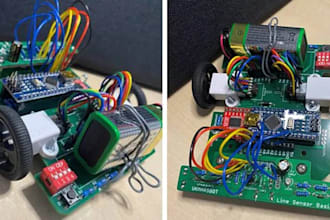








Level 2
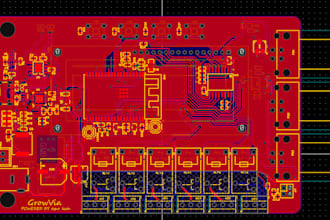
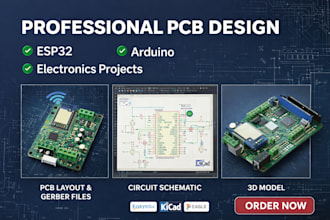
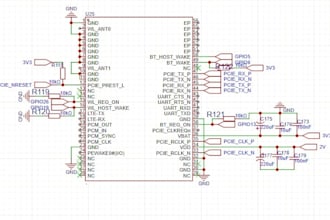
I will do pcb, circuit design, iot, and electronics engineering
Offers video consultations


Level 2
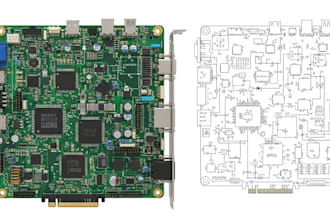
I will do electrical and electronics engineering circuit design and pcb design projects
Offers video consultations










Product Design Services
Electronics projects often require industrial design work to create enclosures, user interfaces, and mechanical assemblies that house circuit boards and components. Professionals offering product design services work alongside electronics engineers to ensure proper fit, adequate cooling, user accessibility, and aesthetic appeal. This collaboration affects overall project cost by adding $200 to $800 depending on design complexity, but prevents costly redesigns when mechanical and electrical requirements conflict. Businesses developing consumer-facing products particularly benefit from coordinated design efforts that balance form and function from project inception.
3D Modeling and Rendering
Creating accurate three-dimensional models of electronic assemblies helps visualize component placement, identify mechanical interferences, and communicate design intent to stakeholders and manufacturers. Engineers may need 3D modeling and rendering support to generate photorealistic product visualizations, create assembly instructions, or perform thermal and structural simulations. These services typically add $100 to $400 to project costs but prove valuable when seeking investor funding, conducting crowdfunding campaigns, or coordinating with overseas manufacturers who require detailed assembly documentation.
PCB Assembly and Prototyping
After completing design work, many businesses require small-batch assembly services to create functional prototypes for testing and validation. Engineers specializing in PCB fabrication coordination can manage board manufacturing, component procurement, assembly, and initial testing. This end-to-end service adds $150 to $500 depending on board complexity and quantity but significantly reduces project management burden and accelerates development timelines by consolidating multiple vendors under single-point accountability.
Technical Documentation and Support
Comprehensive technical documentation including user manuals, maintenance guides, troubleshooting procedures, and certification test reports becomes essential when launching commercial products or supporting field deployments. Some electronics design professionals offer documentation services or can coordinate with technical writers to create compliant materials. Adding professional documentation to your project increases costs by $200 to $600 but proves necessary for training support teams, satisfying regulatory requirements, and enabling customer self-service support channels that reduce long-term operational expenses.
Ongoing Costs and Hidden Expenses
Beyond initial design fees, electronics projects often incur additional expenses that affect total project budgets and should be considered during planning phases.
- Design tool licensing for specialized simulation software, electromagnetic analysis tools, or advanced layout programs may cost $50 to $200 if your engineer passes through subscription fees for project-specific tools
- Component library development for custom parts, specialized connectors, or proprietary modules adds $75 to $150 when standard libraries lack required symbols and footprints
- Compliance testing coordination including electromagnetic interference testing, safety certifications, or environmental qualifications ranges from $100 to $300 for engineering support, separate from actual testing laboratory fees
- Design file format conversion when your manufacturing partners require specific CAD formats different from original design tools costs $50 to $100 per conversion
- Manufacturing liaison support during initial production runs to address assembly questions, approve substitutions, or troubleshoot yield issues typically runs $40 to $85 per hour
- Revision management for maintaining multiple product variants, regional versions, or continuous improvement updates costs $100 to $200 per variant per year
Frequently Asked Questions
How much does electronics design engineering cost on Fiverr?
Electronics design engineering services on Fiverr range from approximately $87 for basic circuit design and schematic services to $190 for comprehensive embedded systems development with firmware integration. Mid-range PCB layout projects typically cost $130 to $185, while specialized services like industrial automation or IoT implementations fall between $100 and $190. Entry-level offerings focus on single deliverables like schematic capture or basic layout work, while premium packages include complete design documentation, manufacturing files, component sourcing support, and sometimes initial prototype coordination. Related services such as firmware development, design validation, or compliance pre-assessment are often available as package upgrades or separate engagements.
What are the typical hourly rates for electronics design engineers?
Hourly rates for electronics design engineers vary from $40 to $85 depending on specialization and experience level. General electronics design work and PCB layout services typically range from $40 to $70 per hour, suitable for routine design tasks, schematic reviews, or component research. Professionals specializing in embedded systems, IoT development, or complex firmware integration charge $40 to $85 per hour, reflecting the interdisciplinary expertise required. Industrial automation specialists maintain rates around $50 per hour due to their knowledge of specialized protocols and safety standards. Hourly pricing is commonly used for projects with undefined scope, ongoing technical consultation, troubleshooting existing designs, or research and development work where requirements evolve during the engagement rather than fixed-package deliverables.
What is typically included in a basic electronics design package?
Basic electronics design packages generally include schematic capture with proper component symbols, initial component selection based on specified requirements, design rule checking to ensure manufacturability, and documentation in standard formats like PDF or editable CAD files. Some packages extend to simple single-layer or two-layer PCB layouts with basic component placement and routing. Most basic offerings include one revision cycle to address feedback or correct errors, though significant scope changes incur additional fees. Upgrades commonly available include multi-layer PCB layouts, complete bill of materials with supplier information, Gerber file generation for manufacturing, 3D visualization of assembled boards, design for manufacturability reviews, and extended revision allowances. Expanding from basic to comprehensive packages typically increases costs by 40 to 100 percent but provides manufacturing-ready deliverables that eliminate additional engineering touchpoints.

Related Guides



About the author
Dolev GamzoR&D Director
Dolev Gamzo is a Director of R&D at Fiverr, where he leads engineering groups and the Fiverr AI Guild. With 12+ years of experience in building software, he spent 5 years managing Fiverr’s payment and financial systems before shifting his focus to Fiverr's inbox moderation framework and order framework. In his free time, Dolev explores nature and spends time with his three children.
