 August 3, 2026
 10 minute reading
In 2026, businesses across all sectors rely on data-driven decision-making to remain competitive. Google Analytics has evolved into an essential tool for understanding customer behavior, optimizing marketing campaigns, and measuring return on investment across digital channels. As privacy regulations tighten and analytics platforms become more sophisticated, the demand for skilled professionals who can interpret complex data and translate it into actionable business strategies continues to grow. Companies recognize that raw data alone provides little value without expert interpretation and implementation.
Understanding what you'll pay for Google Analytics expertise depends on several variables including project complexity, scope of work, and the specialist's experience level. When you work with a Google Analytics expert, you're investing in someone who can configure tracking systems, create custom reports, identify conversion bottlenecks, and provide strategic recommendations that directly impact your bottom line. This article breaks down current pricing across different service types, explains the factors that influence costs, and helps you determine which engagement model best suits your business needs and budget constraints.
Average Google Analytics Expert Costs
Based on recent marketplace data, Google Analytics services show considerable pricing variation depending on the specific type of work required. Understanding these baseline figures helps you budget appropriately and set realistic expectations for your analytics initiatives.
Web Analytics Setup services typically cost around $94.31 for fixed-price projects, with hourly rates ranging from $48 to $100 and averaging $198 per hour. These services focus on initial configuration, tag implementation, and basic tracking setup to ensure your analytics foundation is properly established.
Web Analytics Tracking and Reporting projects average $104.32 for fixed engagements, providing ongoing monitoring, custom dashboard creation, and regular performance reports that help you understand your website's performance metrics and user behavior patterns.
Web Analytics Optimization services come in at approximately $118.58 for project-based work, focusing on refining your existing setup, improving data accuracy, eliminating tracking gaps, and enhancing the quality of insights you can extract from your analytics platform.
Web Analytics Bug Fixes command around $119.15 for fixed projects, with hourly rates spanning $47 to $120 and averaging $612 per hour. These services address technical issues, resolve tracking discrepancies, fix broken event triggers, and ensure data integrity across your analytics ecosystem.
Data Analytics services average $108.88 for fixed-price engagements, offering broader analytical capabilities that extend beyond Google Analytics to include cross-platform data integration and comprehensive business intelligence.
Data Analytics Consultation ranges from $40 to $60 per hour with an average of $580 per hour for specialized advice, and approximately $100.56 for project-based consulting that provides strategic guidance on analytics implementation and interpretation.
Marketing Analytics projects cost around $93.07 on average, specifically tailored to marketing teams who need campaign performance analysis, attribution modeling, and conversion tracking insights.
Social Media Analytics and Tracking services are priced at approximately $82.24 for fixed projects, with hourly rates between $45 and $55 averaging $238 per hour, helping businesses understand how social channels contribute to overall marketing performance.
Which pricing model is best for you?
Fixed-price projects work best when you have clearly defined deliverables such as initial Google Analytics setup, migration to GA4, creation of specific custom reports, or implementation of particular tracking features. This model provides cost certainty and works well for one-time implementations or projects with predetermined scope boundaries. Most businesses choose fixed pricing for setup work, specific bug fixes, or when they need a particular dashboard or report created.
Hourly pricing makes more sense for ongoing analytics support, iterative optimization work, troubleshooting sessions where the time investment is uncertain, or consulting engagements where you need flexible access to expertise. This model suits businesses that require regular analytics reviews, continuous tracking refinements, or strategic advice sessions where the scope naturally evolves based on findings. Hourly arrangements also work well when you're dealing with complex technical challenges that require investigation before the full scope becomes clear.
What Influences Google Analytics Expert Pricing
Project Complexity and Technical Requirements
Basic implementations involving standard e-commerce tracking or simple goal setup on a straightforward website typically take 3 to 5 hours and cost between $150 and $400. Mid-complexity projects that include custom event tracking, cross-domain configuration, enhanced e-commerce setup, and integration with third-party platforms usually require 8 to 15 hours of work, resulting in costs ranging from $600 to $1,500. Advanced implementations involving custom dimensions and metrics, sophisticated attribution modeling, integration with CRM systems, server-side tracking configuration, and complex data layer architecture can extend to 25 to 40 hours or more, with costs reaching $2,000 to $5,000 or higher depending on the technical challenges involved.
Platform and Technology Stack
Working exclusively within Google Analytics 4 for standard website tracking represents the baseline pricing tier. Costs increase when projects require Universal Analytics to GA4 migration work, which involves mapping old configurations to new event structures and typically adds 30 to 50 percent to project costs. Integration with Google Tag Manager, while essential for scalable tracking, adds complexity that can extend timelines by 4 to 8 hours. When analytics experts must work with custom-built content management systems, proprietary platforms, or integrate with enterprise marketing automation tools like Salesforce, HubSpot, or Marketo, expect pricing to increase by 40 to 70 percent compared to standard implementations on common platforms like WordPress or Shopify.
Scope of Analytics Coverage
Tracking a single website with basic page views and goal completions sits at the lower end of the pricing spectrum. Adding mobile app tracking through Firebase alongside web tracking typically doubles the implementation time and cost. Multi-domain tracking that requires unified reporting across several properties increases complexity significantly, usually adding 60 to 100 percent to baseline costs. Businesses requiring comprehensive tracking across websites, mobile applications, point-of-sale systems, and offline conversion imports should expect projects to take three to four times longer than single-platform implementations, with proportional cost increases.
Reporting and Dashboard Requirements
Standard Google Analytics interface usage with minor customization represents minimal additional cost beyond setup. Creating 3 to 5 custom dashboards with specific metrics and segments adds approximately $200 to $500 to project costs. Building automated reporting systems that pull data into Google Data Studio or Looker, combine multiple data sources, and deliver scheduled reports to stakeholders typically adds $800 to $2,000 depending on the number of data sources and reporting complexity. Businesses requiring real-time dashboards, predictive analytics integration, or custom visualization tools should budget an additional $1,500 to $4,000 for these advanced reporting capabilities.
Industry-Specific Configuration
General business websites require standard configuration approaches that align with typical pricing. Healthcare, financial services, or legal industry sites that must comply with strict privacy regulations like HIPAA or GDPR require additional configuration time to ensure compliant data collection, usually adding 20 to 40 percent to project costs. E-commerce businesses need enhanced tracking for product impressions, cart behavior, checkout funnels, and transaction data, which adds moderate complexity. Subscription-based businesses, SaaS companies, or membership organizations requiring cohort analysis, lifetime value tracking, and subscription event monitoring face additional implementation requirements that typically increase costs by 50 to 80 percent compared to basic website tracking.

Cost Breakdown by Project Type
Basic Google Analytics Setup
- Installation of tracking code, basic goal configuration, essential audience segmentation, connection to Google Search Console, and fundamental e-commerce tracking
- Typical price range: $150 to $500
- Best for small businesses, new websites, startups launching their first digital presence, or companies transitioning from no analytics to basic tracking capabilities
Intermediate Configuration and Optimization
- Google Tag Manager implementation, custom event tracking for user interactions, enhanced e-commerce setup, cross-domain tracking configuration, conversion funnel analysis, custom dimension implementation, and integration with one or two marketing platforms
- Typical price range: $600 to $1,800
- Best for growing businesses with established web presence, companies running multiple marketing campaigns, organizations needing deeper insights into customer behavior, or businesses preparing to scale their digital operations
Advanced Analytics Implementation
- Complete GA4 architecture design, custom data layer development, server-side tracking setup, advanced attribution modeling, integration with CRM and marketing automation platforms, predictive analytics configuration, custom API implementations, comprehensive data governance framework, and advanced segmentation strategies
- Typical price range: $2,000 to $6,000
- Best for enterprise organizations, high-traffic websites, businesses with complex customer journeys across multiple touchpoints, companies requiring sophisticated data analysis capabilities, or organizations with dedicated analytics teams needing expert-level configuration
Ongoing Analytics Management and Consulting
- Monthly performance reviews, continuous tracking optimization, regular report generation and analysis, strategic recommendations based on data trends, troubleshooting and bug fixes, quarterly goal reassessment, new feature implementation, and training for internal teams
- Typical price range: $500 to $3,000 per month depending on engagement level
- Best for businesses that lack internal analytics expertise, organizations wanting continuous optimization of their digital marketing efforts, companies running dynamic campaigns requiring frequent tracking adjustments, or businesses seeking ongoing strategic guidance from analytics data
Related Analytics Services and Their Costs



Level 2
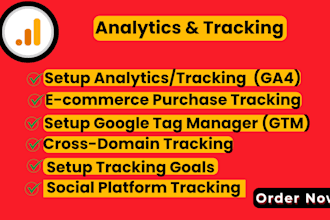
I will troubleshoot setup google analytics 4, ga4 ads conversion tag manager expert
Offers video consultations






Level 2
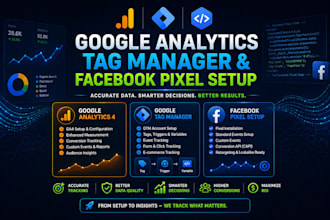
I will setup google analytics 4 ga4 and tag manager GTM with conversion tracking fast
From $120Offers video consultations




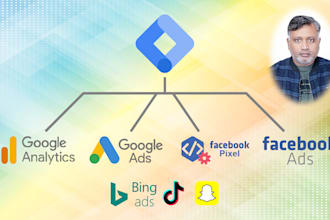
















Top Rated
I will complete google analytics enhanced ecommerce tracking
Offers video consultations






































Conversion Rate Optimization Analysis
Conversion rate optimization work goes hand-in-hand with Google Analytics expertise, as the platform provides the foundational data needed to identify conversion bottlenecks and user behavior patterns. Specialists conducting CRO analysis use Google Analytics data to identify which pages have high exit rates, where users drop off in conversion funnels, and which traffic sources produce the highest-quality leads. This type of analysis typically costs between $800 and $2,500 for a comprehensive audit, with ongoing testing and optimization ranging from $1,000 to $4,000 monthly. Businesses benefit most from this service when they have sufficient traffic to make statistically significant conclusions and are prepared to implement recommended changes based on data findings.
Marketing Attribution Modeling
Attribution modeling helps businesses understand which marketing channels and touchpoints deserve credit for conversions, moving beyond simple last-click attribution to more sophisticated multi-touch models. Professionals working with marketing analytics create custom attribution frameworks that align with specific business models and customer journey complexity. Setting up custom attribution models typically costs between $1,200 and $3,500 depending on the number of channels being tracked and the sophistication of the model required. This investment makes sense for businesses running multi-channel campaigns where understanding the true contribution of each marketing dollar significantly impacts budget allocation decisions.
Data Visualization and Dashboard Creation
While Google Analytics provides built-in reporting, many businesses need customized dashboards that combine analytics data with information from other sources like CRM systems, advertising platforms, or sales databases. Experts who specialize in web analytics services create these unified views using tools like Google Data Studio, Tableau, or Power BI. Custom dashboard projects typically range from $400 to $2,000 depending on the number of data sources, complexity of calculations, and level of interactivity required. Organizations with multiple stakeholders who need different views of performance data or those combining online and offline data sources find the greatest value in these custom visualization solutions.
Google Analytics Training and Enablement
Many businesses choose to build internal analytics capabilities rather than relying entirely on external experts. Training services range from basic Google Analytics literacy for marketing teams to advanced technical training for developers implementing tracking code. Group training sessions for teams of 5 to 15 people typically cost between $800 and $2,500 for a half-day workshop, while comprehensive multi-day training programs can reach $3,000 to $7,000. One-on-one coaching sessions usually run $100 to $250 per hour. Companies investing in training benefit most when they have dedicated team members responsible for analytics who need structured knowledge transfer rather than occasional ad-hoc support.
Analytics Automation and Integration
Businesses looking to streamline their analytics workflows often need specialists who can create automated data pipelines, connect Google Analytics to data warehouses, or build custom integrations between analytics platforms and business intelligence tools. Professionals offering analytics automation services typically charge between $1,500 and $5,000 for integration projects depending on technical complexity and the number of systems being connected. Monthly maintenance for automated systems usually ranges from $300 to $1,200. This service provides the most value for organizations generating large data volumes, those requiring real-time data synchronization across multiple platforms, or businesses building centralized data warehouses for enterprise reporting.
Ongoing Costs and Hidden Expenses
Beyond the initial implementation or project costs, several recurring and unexpected expenses often impact the total cost of maintaining effective Google Analytics tracking.
- Monthly platform fees for premium analytics tools that extend Google Analytics functionality, such as enhanced attribution platforms, heat mapping software, or session recording tools, typically range from $50 to $500 per month depending on traffic volume and feature requirements
- Regular maintenance and updates to tracking code as your website evolves, new features launch, or marketing campaigns introduce new tracking requirements, usually necessitating 2 to 5 hours of expert time quarterly at prevailing hourly rates
- Annual analytics audits to ensure data accuracy, identify tracking gaps, verify that privacy compliance measures remain current, and confirm that reporting aligns with evolved business objectives, typically costing $800 to $2,500 annually
- Training refreshers for team members as Google Analytics introduces new features, updates its interface, or as staff turnover requires onboarding new team members, averaging $500 to $1,500 annually for organizations with dedicated analytics users
- Data storage and processing costs when implementing server-side tracking, using Google Analytics 360, or maintaining data warehouses that store historical analytics data beyond standard retention periods, which can add $100 to $1,000 monthly depending on data volume
- Troubleshooting and emergency fixes when tracking breaks due to website updates, platform changes, or conflicting scripts, often requiring 1 to 3 hours of immediate expert attention at premium hourly rates
Frequently Asked Questions
How much does Google Analytics setup cost on Fiverr?
Google Analytics services on the platform range from approximately $21 for very basic data analysis reports to over $1,200 for comprehensive digital marketing management that includes advanced analytics implementation. Most businesses find that standard web analytics setup projects cost around $94, while more comprehensive tracking and reporting services average $104. Entry-level packages typically include basic tracking code installation and simple goal configuration, suitable for small websites with straightforward tracking needs. Mid-tier offerings around $100 to $300 usually encompass Google Tag Manager setup, custom event tracking, and basic custom reporting. Premium packages exceeding $500 include advanced implementations like enhanced e-commerce tracking, cross-domain configuration, custom dimension setup, and integration with marketing platforms. Many specialists also bundle analytics setup with related services like conversion optimization analysis or marketing attribution modeling for comprehensive packages.
What are typical hourly rates for a Google Analytics expert?
Hourly rates for Google Analytics specialists vary considerably based on expertise level and service complexity. Based on marketplace data, rates range from as low as $47 per hour for basic support to $120 per hour for specialized expertise, with most professionals charging between $40 and $60 per hour for standard consulting work. Hourly pricing becomes common when projects involve troubleshooting sessions where the time investment remains uncertain, ongoing optimization work that requires regular but variable time commitments, or strategic consulting where businesses need flexible access to expertise without committing to fixed-scope projects. Professionals specializing in data analytics consulting typically command higher hourly rates due to their strategic advisory capabilities beyond technical implementation. Experience level significantly impacts rates, with newer practitioners often charging $15 to $30 per hour while seasoned experts with enterprise-level experience may charge $80 to $120 per hour or more for specialized knowledge.
What is typically included in a basic Google Analytics package?
A basic Google Analytics package generally includes installation of the tracking code on your website, configuration of 3 to 5 conversion goals aligned with your primary business objectives, setup of basic audience demographics and interest reporting, connection to Google Search Console for organic search data, and creation of one or two standard dashboard views for monitoring key metrics. Most entry-level packages also include basic e-commerce tracking setup if applicable to your business model, allowing you to track transactions and revenue. Upgrades and extras commonly offered beyond basic packages include Google Tag Manager implementation for more flexible tracking management, custom event tracking for specific user interactions like video plays or PDF downloads, enhanced e-commerce tracking that captures detailed product impression and shopping behavior data, custom dimension configuration for tracking business-specific attributes, cross-domain tracking when your customer journey spans multiple websites, integration with advertising platforms like Google Ads or Facebook, and creation of custom calculated metrics. Expanding scope to include these additional elements typically increases project costs by 50 to 200 percent depending on complexity, as each addition requires additional configuration time, testing, and documentation to ensure accurate data collection.

Related Guides




About the author
Tal GonenMarketing & Branding Expert
Tal Gonen is a Marketing & Branding expert with 10 years of experience working with 15+ global brands across 20+ EMEA markets. She specializes in building growth strategies for SaaS startups, combining consumer insights with data-driven creativity to help entrepreneurs build brands and secure funding.
