What is copywriting?
Copywriting is written content designed to encourage readers to take a certain action, such as completing a purchase or booking an intro call. Copywriters craft copy for ads, email marketing campaigns, billboards, and social media posts to capture the audience’s attention, promote products, and help potential customers understand how product features can benefit them.
The goal of copywriting is to craft an engaging message followed by a compelling call to action (CTA) to increase conversion rates and sales.
What is content writing?
Content writing involves creating high-quality content, such as guides and articles, that educates, entertains, or informs readers. While it may still influence audiences to take action and drive sales, this isn’t content writing’s main purpose. Brands can turn to content writing to provide valuable information to their audience with the goal of building long-term relationships with them.
The differences between copywriting and content writing
Businesses looking to tell a compelling story, achieve their marketing goals, and drive sustainable growth leverage the power of the written word to reach their target audience.
Good content and effective copy are critical in attracting, engaging, and persuading audiences. In the never-ending copywriting versus content writing debate, it always seems like one option is better than the other. But is that all there is to it?
1. Purpose
One of the biggest differences between copywriting and content writing is their purpose. David Ogilvy, advertising executive and founder of Ogilvy, a renowned advertising firm, is famous for saying, “When I write an advertisement, I don’t want you to tell me that you find it ‘creative.’ I want you to find it so interesting that you buy the product.” Copywriting focuses on creating copy that persuades readers and puts “pressure” on them to take immediate action. It is also used in campaigns to achieve a specific marketing or sales goal.
It takes on various forms that require unique skills and approaches from copywriters, including:
Technical copywriting: In technical writing, a copywriter must clearly communicate complex information to help their target audience carry out a task or achieve a goal. SEO copywriting: Yes, there is such a thing as SEO copywriting, where the copywriter optimizes content to boost your site’s visibility in search engine results and attract audiences.
Take this example from Geico. It uses concrete data to show how potential customers can benefit from its service. The copy also effectively incorporates an image alongside a bullet list, giving visitors an overview of the Geico mobile app and its features.
Meanwhile, different types of content, such as blog posts, case studies, or product descriptions, are used in content writing to engage audiences.
For example, this article is designed to help you better understand the topic of copywriting versus content writing. Its goal is to teach you about the key differences of each one and how you can use both copywriting and content writing to grow your business.
2. Time horizon
Copywriting aims to get short-term results, while content writing is about creating content that’s part of a long-term strategy. The latter is more evergreen and can be repurposed to suit different needs. For example, a brand can use snippets from an article to create an infographic or update the article to include more relevant information.
It can take some time before you see results from content writing efforts. Meanwhile, you can see more immediate results for copywriting by tracking metrics like click-through or open rates.
3. Emotional approach
Effective storytelling is key to building strong connections with your audience. It helps you create memorable experiences, build trust, and show your target audience what your brand’s all about. Both copywriting and content writing can help you achieve that. Copywriting targets an audience’s emotions by creating a sense of urgency and using emotional triggers. A copywriter skillfully uses words to catch a reader’s attention, make them feel involved, and drive conversions.
Common emotional triggers, aside from urgency, include social approval like in testimonials or reviews, where the trigger points out that a large number of people approve of a product or service. This inadvertently influences readers and shows them that a particular offering is worth their time and money.
In content writing, the focus is on gaining your audience’s trust and building credibility. Let’s look at the bigger picture, which involves content marketing. In Content Marketing Institute’s 2023 report, 81% of B2C marketers confirm that content marketing, which includes creating relevant content to achieve marketing goals, has helped generate brand awareness.
For 77%, content marketing has helped them build or grow credibility and trust. This is followed by 71% of marketers who said that content marketing has allowed them to educate their audiences.
Even though a content writer isn’t promoting a product or persuading an audience to purchase, their content indirectly influences readers to make a certain decision.
Carolyn Vadino, Head of Communications at Gemini, a bitcoin and crypto platform, says, “Brand trust is vital to a company’s livelihood. It will help cushion the blow if your brand reputation takes a hit, empower your audience to provide honest feedback, and give you the flexibility to take risks in the future.” 4. Relationship to sales
Good copywriting occurs when your audience doesn’t realize they’re being sold a product or service. They consider a solution and then look forward to closing the deal. At its core, copywriting has a direct relationship to sales and conversions.
Advertisements, for example, use clever wording to introduce a solution and compel readers to purchase. Effective copywriting evokes emotions by immediately addressing your audience’s wants and needs, whether a podcast ad, web page sales copy, or a video script.
A 2023 study by Horowitz Research reveals that ads are still very effective regardless of your target audience’s age group and the channels you’re using. However, there are nuances to these findings. For instance, younger audiences (18-34 and 35-49 years old) are more likely to find influencer sponsorships and social media posts more effective than older consumers (50+ years old). Moreover, younger consumers consider traditional ads, such as those on TV, to be less effective. Content writing is aimed at indirect sales through value proposition. With great content, you’re solving your audience’s pain points and using content to build a relationship with them. You know their problems, and you’re providing them with helpful resources like guides or tutorials.
5. Main focus
Copywriting uses triggers to optimize conversions. We’ve previously mentioned how copywriting creates a sense of urgency to drive people to take immediate action. Aside from that, great copy makes people feel understood by brands, which can help generate conversions and sales.
Content writing is focused on optimizing copy for search engines (SEO). Brands create optimized content so that it ranks for specific keywords. This, in turn, helps increase your visibility online, making it easier for potential customers to find your website and check out your offerings. This also drives organic traffic to your website.
Don Dodds, founder of M16 Marketing, a web design and SEO firm, explains, “Content writing is better for SEO than copywriting for several reasons. First, it offers high value to readers. And second, it doesn’t express commercial intent. Rather, content writing is purely informational, so readers enjoy consuming and sharing it. Another reason content writing is better for SEO is its longer length. Long-form content generally ranks for more keywords than short-form content. It attracts more views, which usually leads to more backlinks.” 6. Content length
Copywriting like in social media ads or taglines focuses more on creating concise, punchy messages that are around 100 words or so. This helps capture the audience’s attention and engage them quickly. In content writing, the writer crafts more in-depth, comprehensive website content like guides or tutorials, which are around 1,000 words or longer, to provide readers with more valuable and helpful information.
7. Traffic and leads
Content writing attracts new organic (and relevant) targeted traffic. Writers craft content designed to generate organic web traffic. Good content can help you stand out from the competition, allowing you to drive more engagement, get more backlinks, and drive increased traffic to your site.
Meanwhile, copywriting works to convert your existing traffic into leads and customers. Effective marketing copy works best for the latter part of the buyer’s journey, helping convert leads and drive conversions.
Which is better, copywriting or content writing?
So, who wins in the copywriting versus content writing discourse? The bottom line is that one isn’t always better than the other. Both types of writing are necessary depending on your marketing strategy. While copywriting and content writing are often used interchangeably, they serve different purposes. For instance, copywriters and content writers must deeply understand who they’re writing for, aka your target audience. They must be knowledgeable of the topic they’re writing about. They must be skilled at creating hooks that pique the readers’ interest and make them want to continue reading.
Here’s how to decide what you need for your next project.
Business goals
You have to consider your business goals, which can play a role in whether or not you favor copywriting or content writing.
For example, if your goal is to build customer loyalty and retention, then content writing, with its ability to cultivate audience trust, can help you achieve that. If your focus is on generating leads and sales, then copywriting, with its persuasive approach and capacity to convert existing traffic, can help you meet that particular goal.
Customer journey
The stage of the customer journey can also influence your choice.
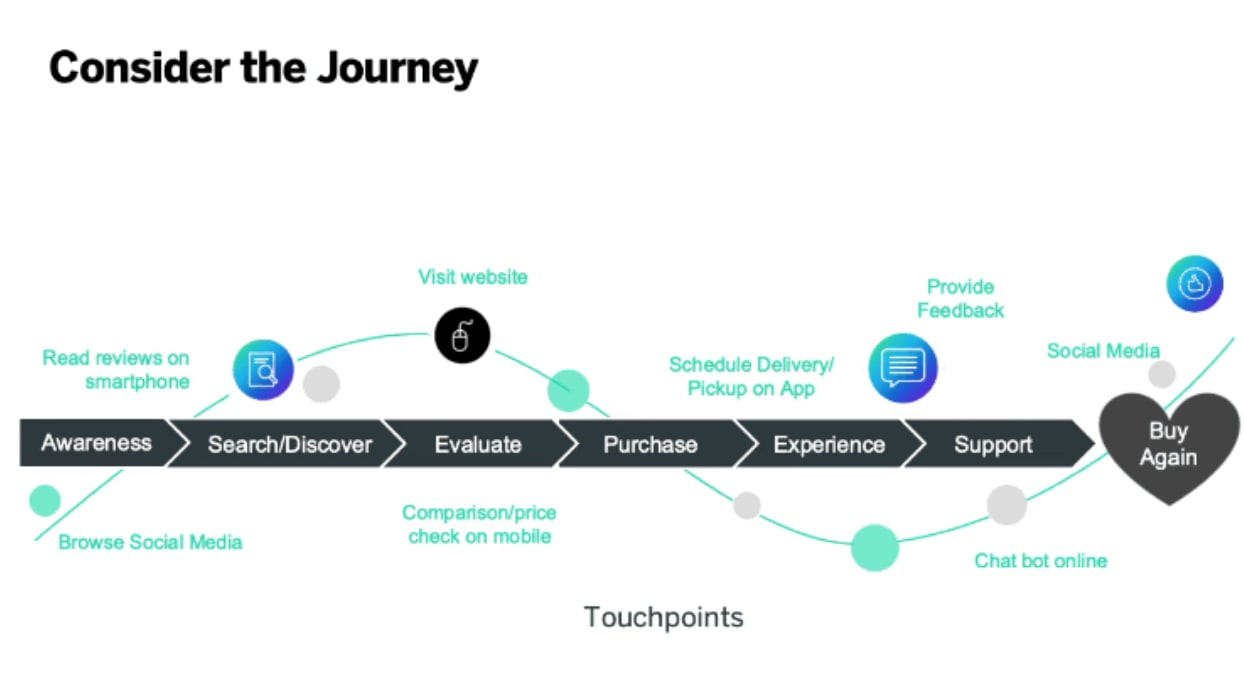
If you want to build authority and credibility, then content writing is the best option when you’re dealing with potential customers in the awareness stage. For the latter stages (consideration and decision), copywriting is the better option, given that your audience is likely considering the unique value you bring to the table. When they reach the consideration stage, they already have all the information they need to make an informed decision.
Content writing is critical to the customer’s post-sale journey (retention and advocacy). By providing them with relevant and useful information, such as follow-up communications, you’re nurturing their loyalty in a bid to turn them into brand advocates.
Marketing strategy
Lastly, your overall marketing strategy and available resources may impact your decision on whether to opt for copywriting or content writing. If your strategy is focused on generating leads or boosting sales, then copywriting is the way to go. Meanwhile, if you’re focused on building authority and being recognized as a thought leader, then content writing is the better option.
The good news is that you can leverage both approaches for your marketing strategy. They work together to enhance your image and grow your business. Without copywriting, your content marketing efforts won’t be able to capture and hold your audience’s attention at the top of the marketing funnel. Without content marketing, your copywriting efforts won’t be able to effectively target your audience.
The role of AI in content marketing
While the technology is transforming current services and capabilities to drive increased value for users and their audiences, it won’t replace human ingenuity. At Fiverr, we understand the growing role of AI in daily life, which is why we’re committed to bringing the best of both worlds, human and tech, together. Whether you’re writing a new book or thinking of creating a white paper for your business, you can quickly and easily find skilled specialists to work with and bring your projects to life. Think of it this way: if you just use copywriting, then you can get people to take action. The problem is that you won’t be able to focus on other key aspects of growing your business like building your credibility. Why? Because your audience might end up thinking that you only want to sell to them and not give them an actual solution.
Meanwhile, if you just use content writing, yes, you can provide added value to your audience, but how do you get the word out? How do you pique their interest without attention-grabbing copy?
Hire the best writers for your business on Fiverr
Before hiring a writer, determine your content strategy goals and how content writing or copywriting can help you achieve them. Next, consider how the writer will fit within your existing marketing team.
With Fiverr, finding the best writer is easier than ever. Whether you’re looking for a ghostwriter or a proofreader, we’ve got you covered. Fiverr’s marketplace helps you find skilled copywriters, content writers, and editors. Need ongoing writing services and talent you can trust for the long haul? Fiverr Pro is a premium business solution that gives you access to bespoke hiring services and connects you with top freelancers. If you’re a writer who wants to hone their skills, you can check out our guides. We also offer on-demand courses to help you take your skills to greater heights. Discover the Fiverr difference today.
Copywriting vs. content writing FAQ
What pays more, copywriting or content writing?
Copywriting tends to offer more competitive salaries primarily because it’s closely tied to conversions and sales. Brands can immediately see the impact of good copy on their bottom line. With content writing, brands may have some difficulty measuring the returns that can be directly attributed to pieces of content.
To put things into perspective, we’re sharing data from Payscale. Depending on your level of experience as a copywriter, you can earn between $46,000 and $73,000. Meanwhile, a content writer’s salary can range from $42,000 to $70,000. Note that aside from experience, factors like your location, industry, and the demands of the role can influence your salary. You also have to consider how to charge fees, if you’re going by per-project or per-word rates. Can a copywriter be a content writer?
Generally speaking, yes. These may be two different roles, but they often utilize overlapping skill sets, like strong writing, editing, and proofreading abilities. However, if you’re planning to wear different hats as a writer, you must be able to differentiate their goals and approaches. For example, as a copywriter, you must be skilled at leveraging persuasive language to create copy and sell to your target audience. Meanwhile, as a content writer, you must know how to create informative and value-added pieces of long-form content like in-depth guides and articles.
What is the difference between copywriting and content editing?
Copywriting helps your target audience make informed purchasing decisions through short-form persuasive copy like ads and landing page content. Content editing, on the other hand, refers to the process of fixing the structure, flow, and substance of a piece to enhance its quality and impact.
What is the salary of a content copywriter?
Content copywriters can potentially earn an average of more than $76,000 annually or $37 per hour. Rates will depend on your location, industry, level of experience, specialization, and whether you’re working with a freelance or in-house writer. Fiverr makes it easy for you to find and connect with skilled writers, proofreaders and editors. Use the search bar to find world-class freelance services. We’ve also added filters so you can narrow down the results based on factors like categories, service options, budget, and delivery time. 
 August 3, 2026
 5 minute reading