 October 7, 2026
 8 minute reading
99designs built its reputation on design contests: a business submits a brief, multiple designers create competing concepts, and the business picks a winner. This model works well for clients who want a wide range of visual directions quickly. It works less well for those who want to collaborate directly with one designer, keep full control over the creative process, or build a long-term working relationship with someone who understands their brand.
If you are evaluating alternatives to 99designs in 2026, the right platform depends on whether you want to work through an open contest, a curated freelance marketplace, or a fully managed hiring service. This guide compares the 10 most relevant alternatives and explains how to choose between them.
At a glance: The best 99designs alternatives in 2026
- 1. Fiverr: the strongest alternative for businesses that want to choose their designer up front and work with them directly through brief, revisions, and delivery.
- 2. DesignCrowd and 3. Crowdspring: contest-based platforms with the same model as 99designs, suited to clients who want many concepts at once.
- 4. Guru, 5. Freelancer.com, and 6. PeoplePerHour: direct-hire marketplaces with profile-based vetting and varying payment structures.
- 7. Dribbble and 9. Behance Talent: portfolio discovery tools rather than managed marketplaces, with no built-in vetting or payment protection.
- 8. Toptal: a curated matching service for enterprises with complex, high-budget needs. 10. Upwork: a broad, general-purpose marketplace.
- The core choice is contest versus direct hire: contests deliver variety on a single concept, while direct hire gives you creative control and a designer you can work with again.
Comparison table: Best 99designs alternatives
Platform
Hiring Model
Talent Vetting
Collaboration Style
Best For
Fiverr
Direct hire from marketplace listings
Reviews, ratings, and performance levels
One-on-one with a chosen designer
Businesses that want control, flexibility, and a long-term design relationship
DesignCrowd
Contest-based, similar to 99designs
Open entry, no formal vetting
Multiple designers compete
Clients who want many concepts to choose from
Crowdspring
Contest-based
Open entry, no formal vetting
Multiple designers compete
Startups exploring several creative directions at once
Guru
Direct hire from marketplace listings
Profile-based, limited vetting
One-on-one with a chosen freelancer
Clients who want flexible payment structures
Freelancer.com
Bidding and direct hire
Open entry, limited vetting
One-on-one or competition-based
Clients comparing many bids on a budget
PeoplePerHour
Direct hire from marketplace listings
Profile-based, limited vetting
One-on-one with a chosen freelancer
UK and Europe-based businesses
Dribbble
Job board and direct outreach
No vetting; portfolio-based discovery
One-on-one, self-managed outreach
Clients who already know what visual style they want
Toptal
Curated matching service
Manual screening process
Matched to a vetted freelancer
Enterprises with complex, high-budget design needs
Behance Talent
Portfolio discovery and direct outreach
No vetting; portfolio-based discovery
One-on-one, self-managed outreach
Clients sourcing designers by visual style
Upwork
Bidding and direct hire
Profile-based, limited vetting
One-on-one or ongoing contracts
Clients who want a broad, general-purpose freelance pool
Best 99designs Alternatives
1. Fiverr
Fiverr is a global freelance marketplace where businesses browse designer profiles, compare portfolios and reviews, and hire directly for a specific project. Unlike 99designs' contest format, there is no waiting for multiple submissions and no risk of paying only for a single winning concept while other designers' work goes unused. A business selects a designer up front based on relevant experience and prior work, then collaborates with that person directly through the brief, revisions, and final delivery.
For businesses that are not sure where to start, Fiverr's project brief feature offers another entry point. Clients describe their project, timeline, and budget, and an AI assistant converts that description into a polished project brief. Once the brief is ready, Fiverr matches it against relevant freelancers on the platform and sends it to those who fit the description, requirements, and budget range. Clients then receive tailored offers directly and choose from a shortlist rather than searching the marketplace manually.
This structure suits businesses that need more than a one-off logo. Fiverr's design categories cover the full range of visual identity work, including logo design, brand style guides, packaging and label design, and business cards and stationery. Businesses that need a complete brand identity system, not just a single asset, can move from an initial logo project into related work such as website design or illustration without switching platforms or starting a new vetting process each time.
2. DesignCrowd
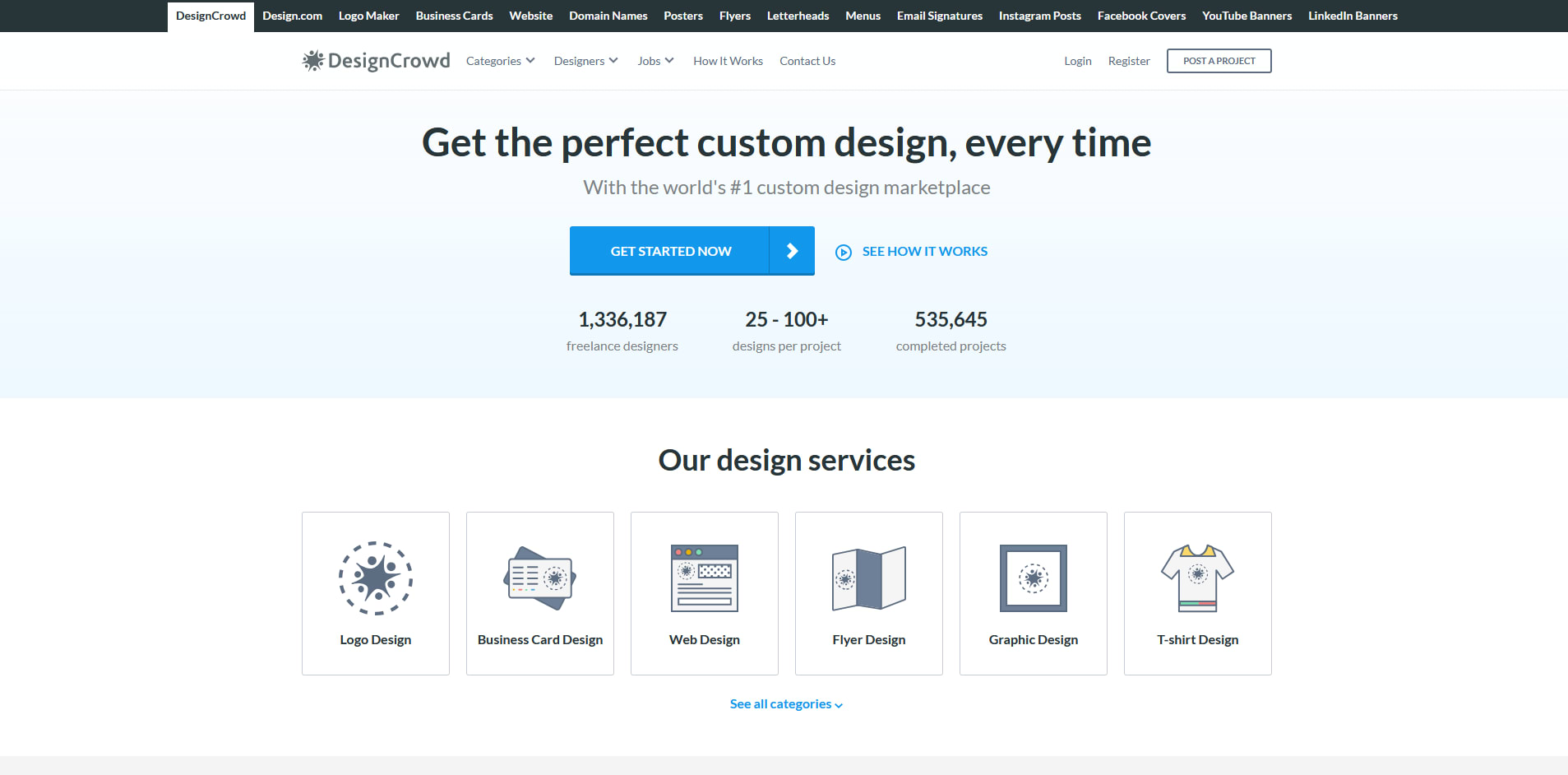
DesignCrowd follows the same contest model as 99designs. Businesses post a brief, designers submit competing concepts, and the business selects one. It is a reasonable option for clients who specifically value volume and variety over one-on-one collaboration, but it carries the same tradeoffs: no guaranteed direct relationship with a designer and no structured revision process built around a single point of contact.
3. Crowdspring
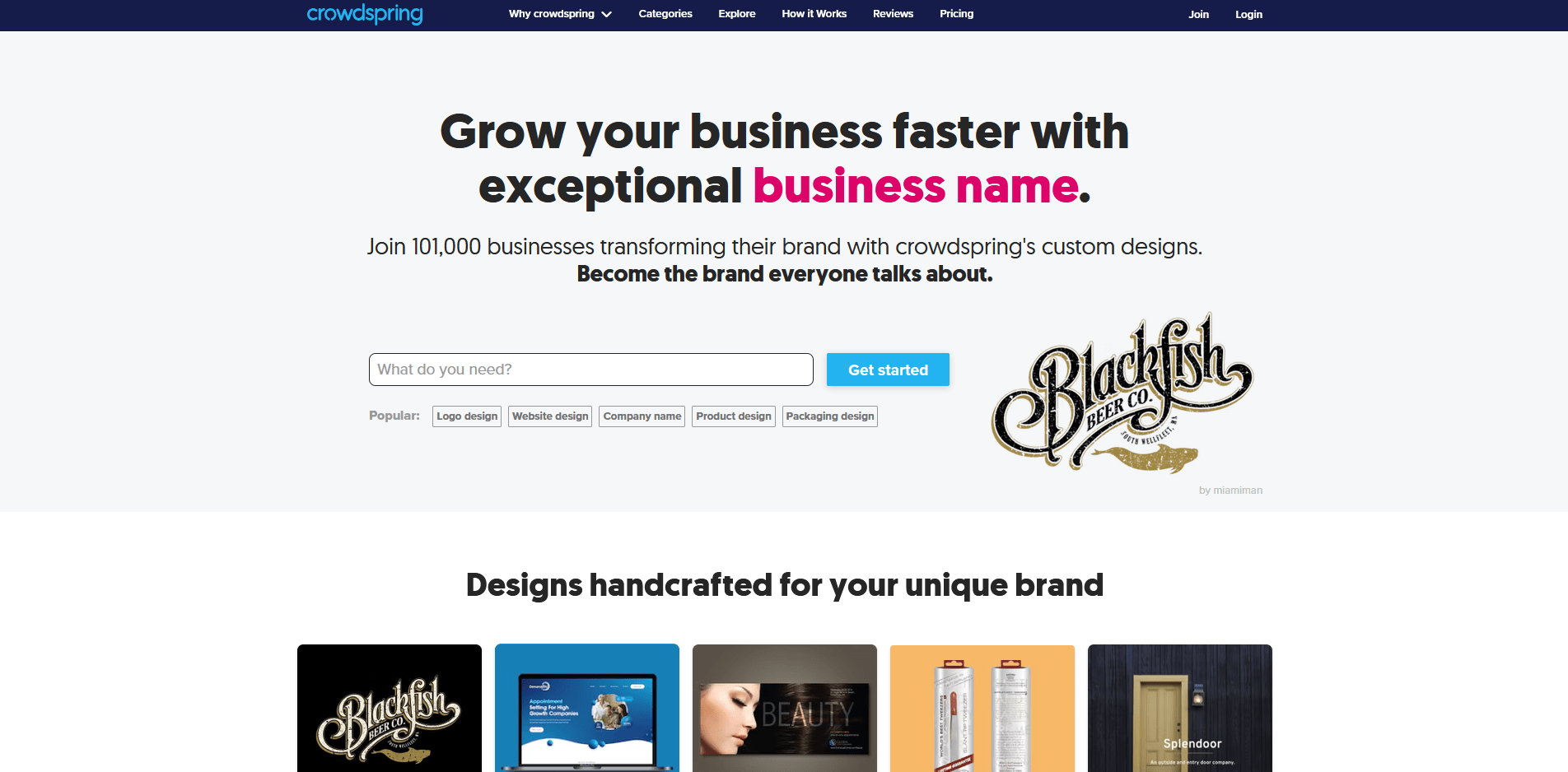
Crowdspring also runs on a contest structure, positioned primarily toward startups and small businesses. It offers a similar experience to DesignCrowd and 99designs, with businesses reviewing multiple submitted concepts before selecting a winner. As with other contest platforms, ongoing collaboration and creative control during the process are limited compared to a direct-hire model.
4. Guru
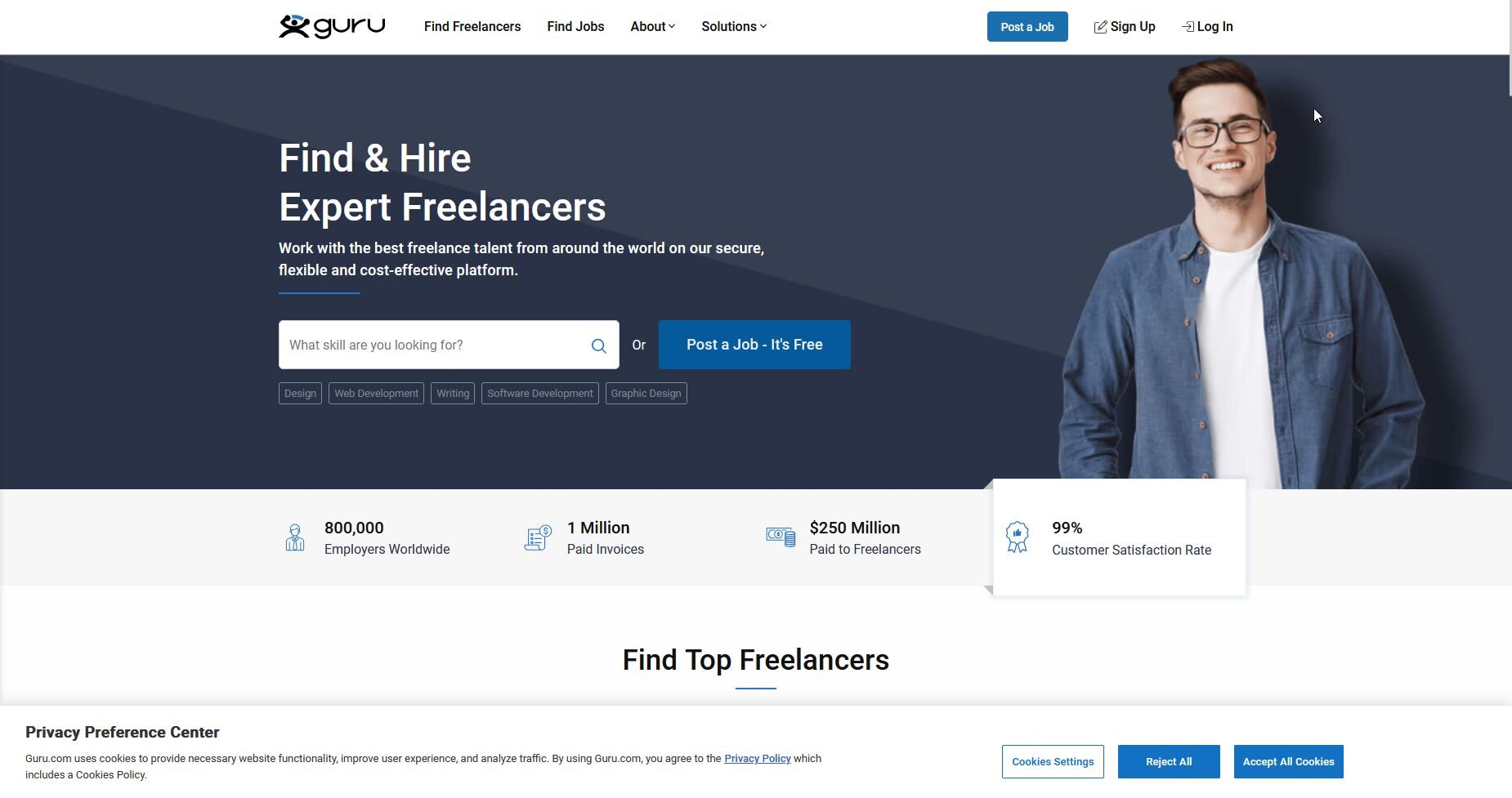
Guru is a general freelance marketplace with a dedicated design category. Businesses can browse freelancer profiles, compare rates, and hire directly. Guru offers flexible payment arrangements, including milestone-based payments, which can appeal to those managing longer projects. Vetting is limited to what freelancers self-report on their profiles, so users should expect to do more due diligence than on a more curated platform.
5. Freelancer.com

Freelancer.com combines a bidding system with direct hiring and occasional contest-style projects. Businesses post a job and receive competing bids from freelancers, then choose based on price, portfolio, and reviews. The bidding format can create a wide price range for similar work, so clients need to evaluate proposals carefully rather than defaulting to the lowest bid.
6. PeoplePerHour
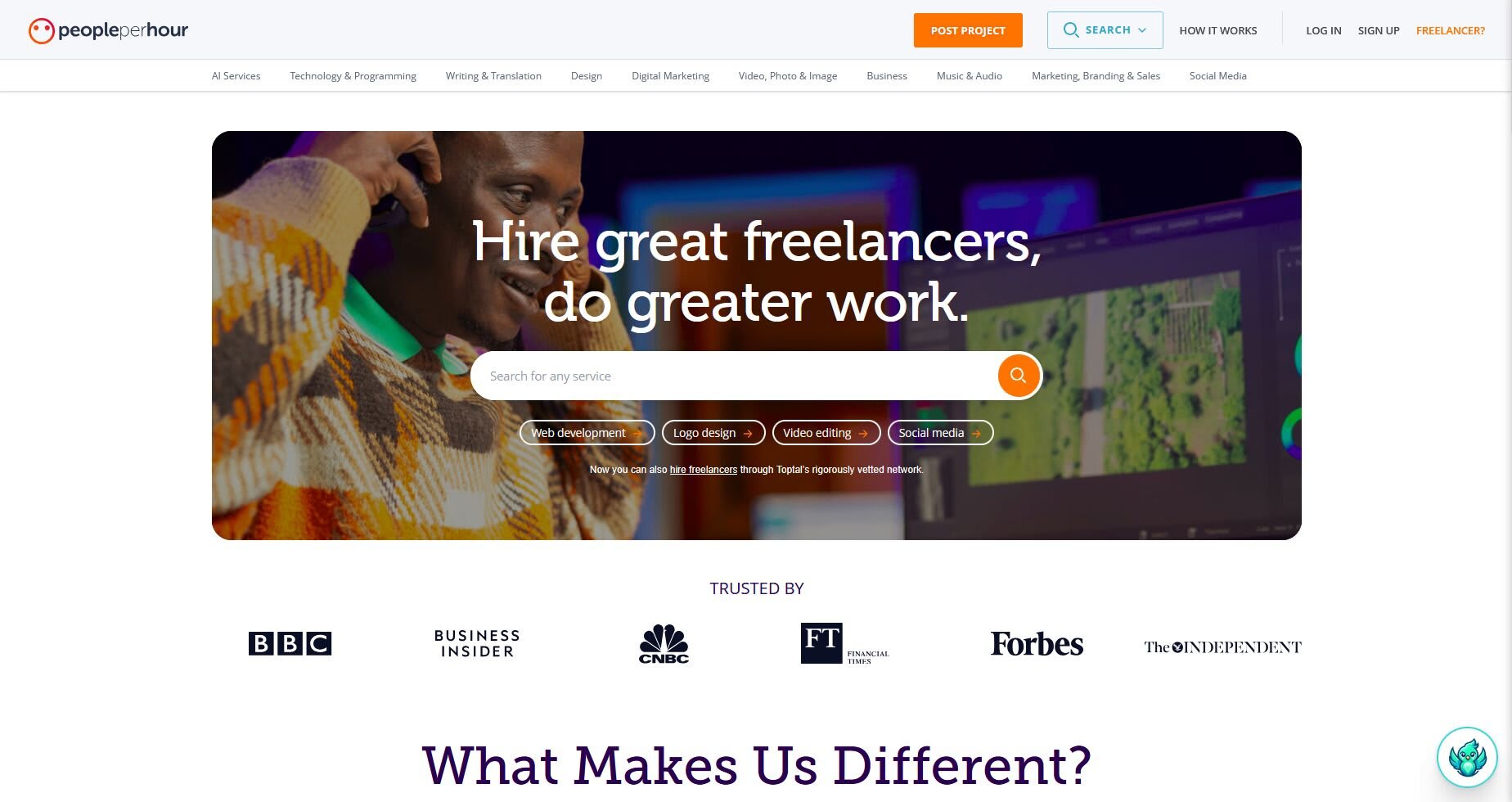
PeoplePerHour is a marketplace with a strong base of UK and European freelancers, including designers. Businesses can post a project or browse existing service listings and hire directly. It functions similarly to other direct-hire marketplaces, with vetting largely limited to freelancer profiles, ratings, and past client feedback.
7. Dribbble
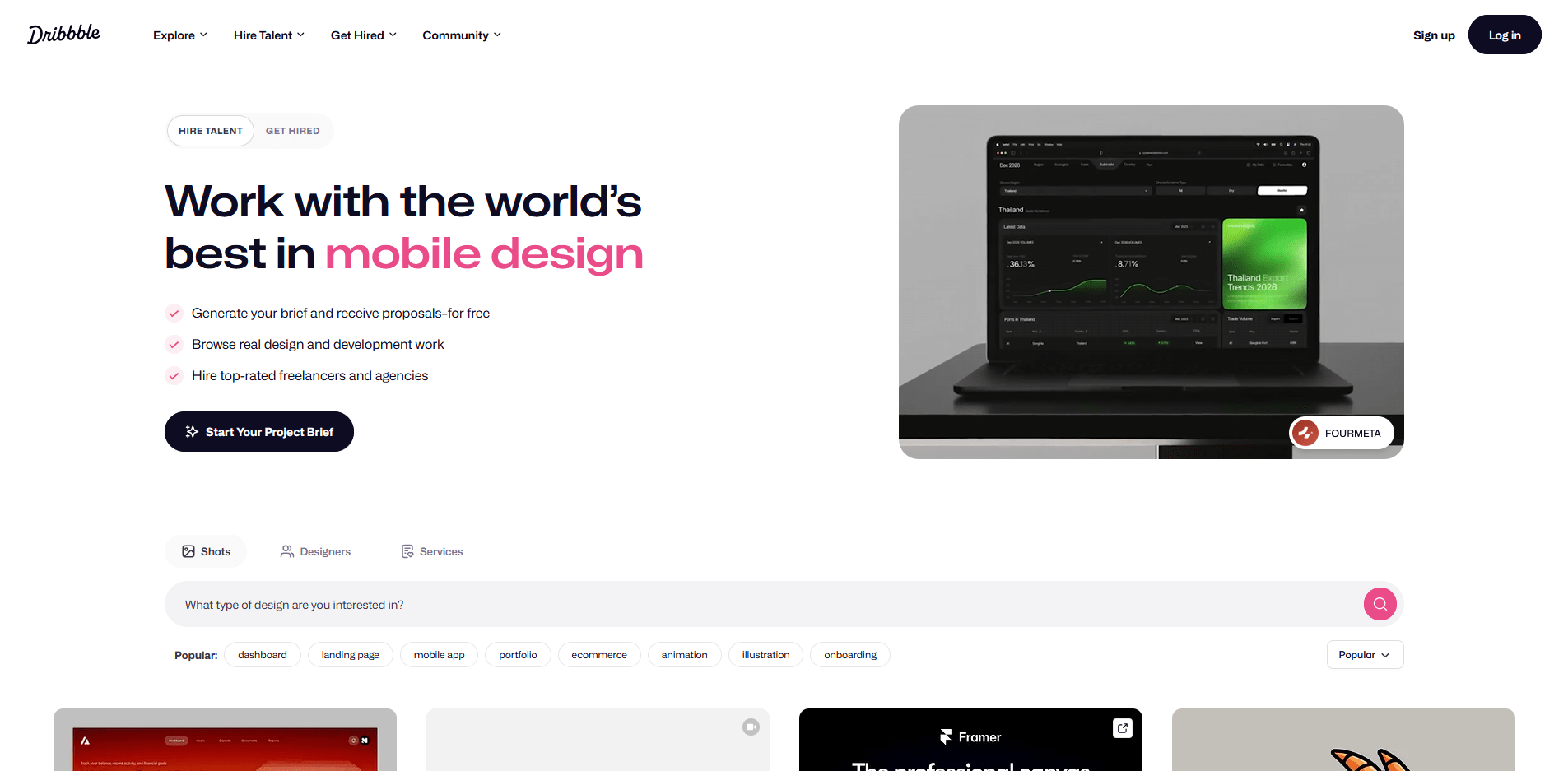
Dribbble is primarily a design portfolio and discovery platform rather than a structured marketplace. Businesses browse designer portfolios by style and reach out directly to freelancers listed on the job board or through profile links. This works well for those who already have a clear visual direction in mind and want to find a designer whose existing work matches it, but Dribbble does not provide built-in vetting, escrow payments, or a formal hiring workflow.
8. Toptal
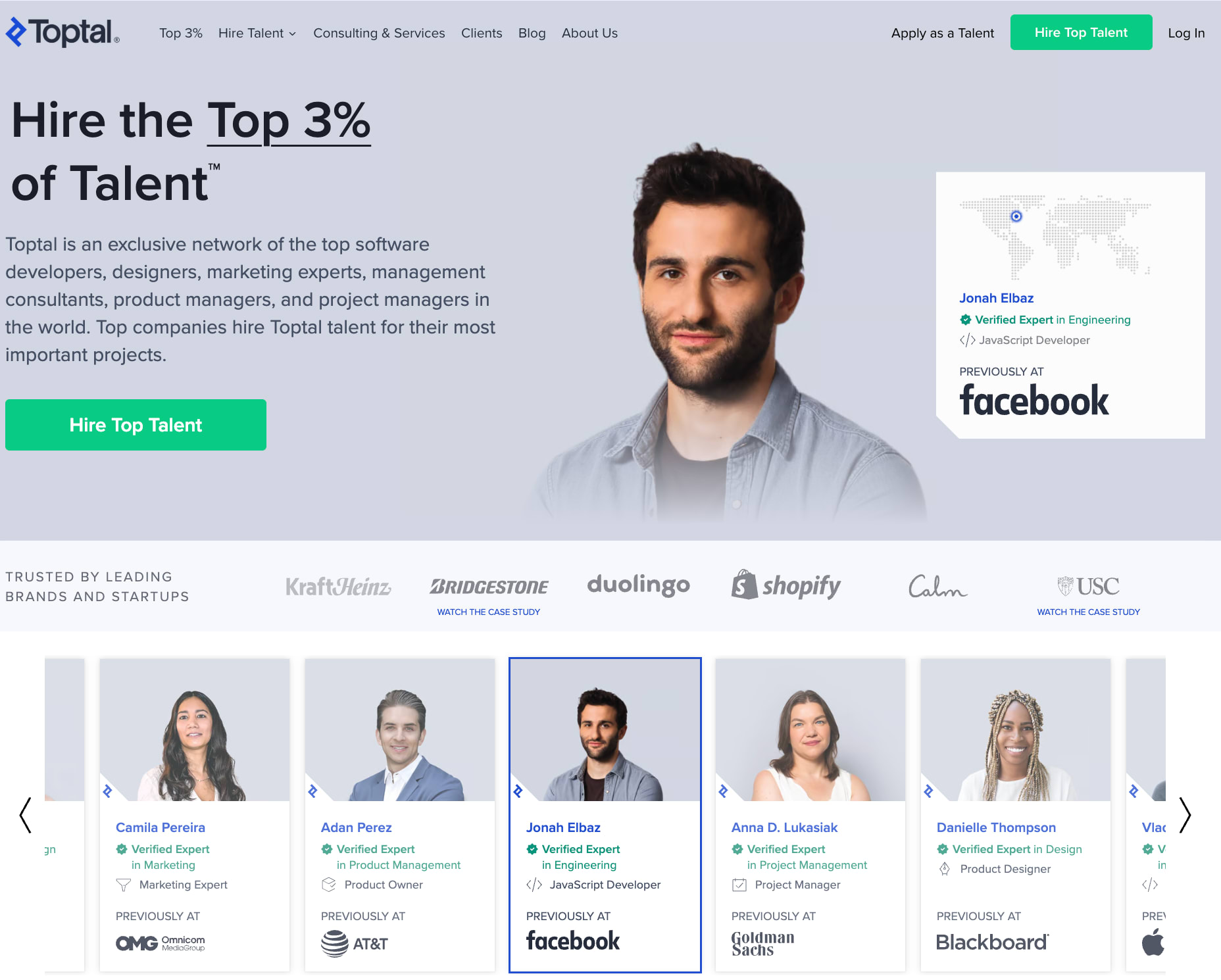
Toptal positions itself as a highly selective freelance network, with a manual screening process for the designers it accepts. Rather than browsing and choosing independently, businesses describe their needs and are matched with a vetted freelancer by Toptal's team. This model suits enterprises with complex, high-budget design needs and less time to review candidates themselves, though it typically comes with a higher price point and less direct control over which designer is selected.
9. Behance Talent
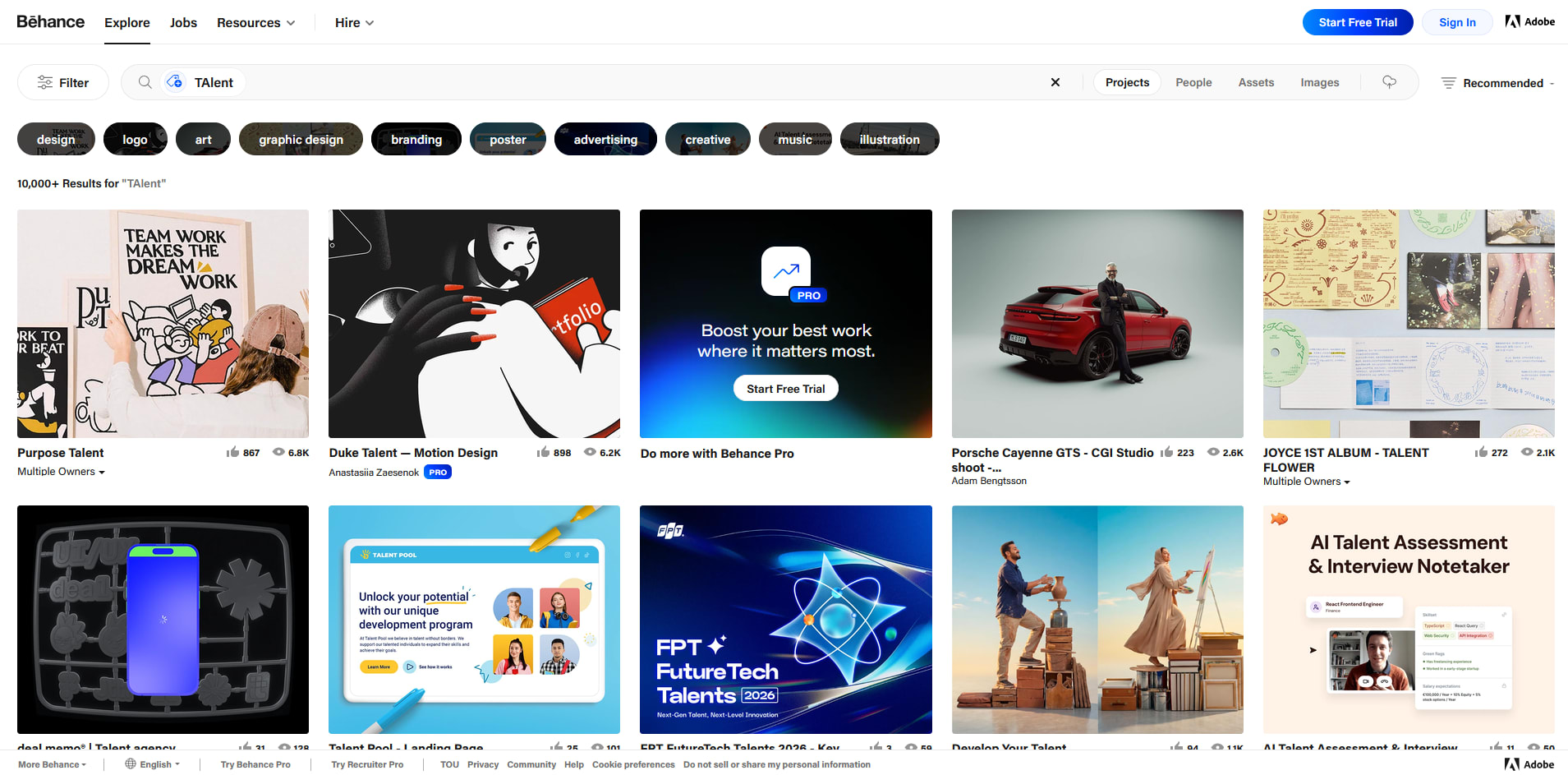
Behance, Adobe's design portfolio platform, includes a talent discovery feature that lets businesses search for designers by style, skill, and location. Like Dribbble, it functions as a portfolio and outreach tool rather than a managed marketplace. There is no formal vetting, contract structure, or payment protection built into the platform itself, so businesses handle those elements independently once they identify a designer they want to contact.
10. Upwork
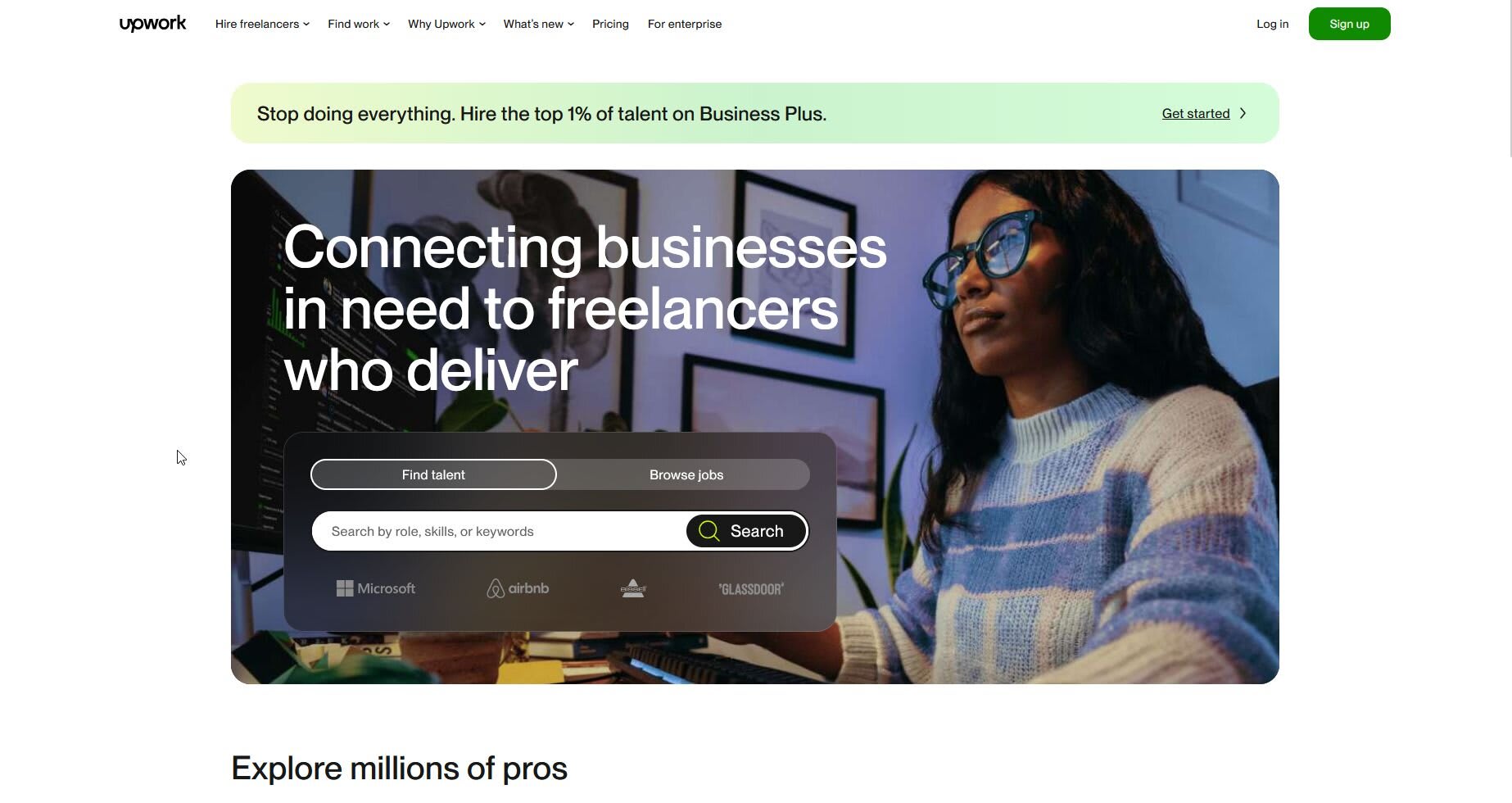
Upwork is a large, general-purpose freelance marketplace that includes a broad range of design services alongside many other categories. Businesses can post a job, review bids, or search freelancer profiles directly. Because Upwork spans nearly every professional category rather than focusing on design and creative work, users may need to spend more time filtering for design-specific expertise compared to a platform built specifically around creative or design talent.
How to Choose a 99designs Alternative
Selecting the right platform depends on how you weigh a few key factors, roughly in the order most evaluate them:
- Talent quality. Consider how the platform helps you evaluate designers before hiring. Performance-based review systems, verified ratings, and visible work history reduce the research burden on your side.
- Portfolio relevance. Review whether the designer's prior work matches your industry, style, and project type before reaching out or hiring.
- Collaboration and communication tools. Determine whether the platform supports direct messaging, file sharing, milestone tracking, and revision requests, since these affect how smoothly a project runs after hiring.
- Speed of hire. Contest-based platforms take time to collect and review multiple submissions. Direct-hire marketplaces generally let you start a project as soon as you find the right designer.
- Pricing structure. Compare how each platform prices work: fixed project rates, hourly rates, or contest prize pools. Pricing should be one of the last factors you weigh, after confirming talent quality and working style fit your project.
Contest model vs. direct hire: How they differ
Contest model
Direct hire
How it works
Designers submit competing concepts
You choose a designer up front
Platforms
99designs, DesignCrowd, Crowdspring
Fiverr, Guru, PeoplePerHour
Creative control
Limited during the process
Full, throughout the brief
Speed
Wait for submissions
Start once you've chosen
Ongoing work
No guaranteed relationship
Same designer on future projects
Best for
One-off concept, many directions
Brand identity and continuing work
Businesses that need a single, one-off concept with several visual directions to choose from may still prefer a contest-based platform. Businesses that want a direct working relationship, more control over the creative process, and the option to continue working with the same designer on future projects are generally better served by a direct-hire platform like Fiverr.
Start Your Design Project on Fiverr
Ready to find the right designer for your project? Browse Fiverr's global marketplace of design talent and hire for a single project or build an ongoing working relationship. Compare designer portfolios, reviews, and hire directly for logo design, brand identity, packaging, and more.

FAQs
Fiverr offers two ways to find the right designer. You can browse the marketplace and hire directly based on portfolio and reviews, or post a project brief and receive tailored offers from relevant freelancers matched to your requirements and budget. Either way, you work one-on-one with a single designer from the start. 99designs uses a contest model, where multiple designers submit competing concepts and the business selects a winner after the work is already completed.
Related Guides


About the author
Sagi HaimDirector of Business Economics
Sagi is the Economics Director within Fiverr's business department, where he connects top-down corporate strategy to bottom-up execution across the company's strategic plans. He owns success signal definition, learnings quality standards, and corporate KR tracking for initiatives spanning demand generation, fulfillment, and operational excellence, bringing deep expertise in causal inference and applied economics to Fiverr's biggest strategic questions.
