 November 9, 2026
 10 minute reading

Most AI implementation challenges come down to ordinary causes: an unclear goal, data that was harder to use than expected, or a pilot with no path to production. None of them calls for a new strategy, and many can be corrected mid-project, either in-house or with AI development services on Fiverr.
The stakes are real. RAND's 2024 research noted that, by some estimates, more than 80% of AI projects fail, twice the rate of IT projects that do not involve AI. Gartner has made similar predictions for generative and agentic AI.
The good news is that the same mistakes repeat. The nine below come up most often, each with a plain explanation of why it costs you and what to do about it.
At a glance: The most common AI implementation mistakes
- Planning: starting from the technology (Mistake 1), no measurable success criterion (Mistake 2) and treating the pilot as the finished project (Mistake 3).
- Data: underestimating preparation (Mistake 4) and connecting too many systems at once (Mistake 5).
- People: designing without end users (Mistake 6) and skipping human review (Mistake 7).
- Budget and ownership: forgetting running costs (Mistake 8) and leaving no owner after launch (Mistake 9).
Most of these can be fixed in-house, and specialists on Fiverr can step in where a fix needs skills the team does not have.
Why AI projects fail more often than other IT projects
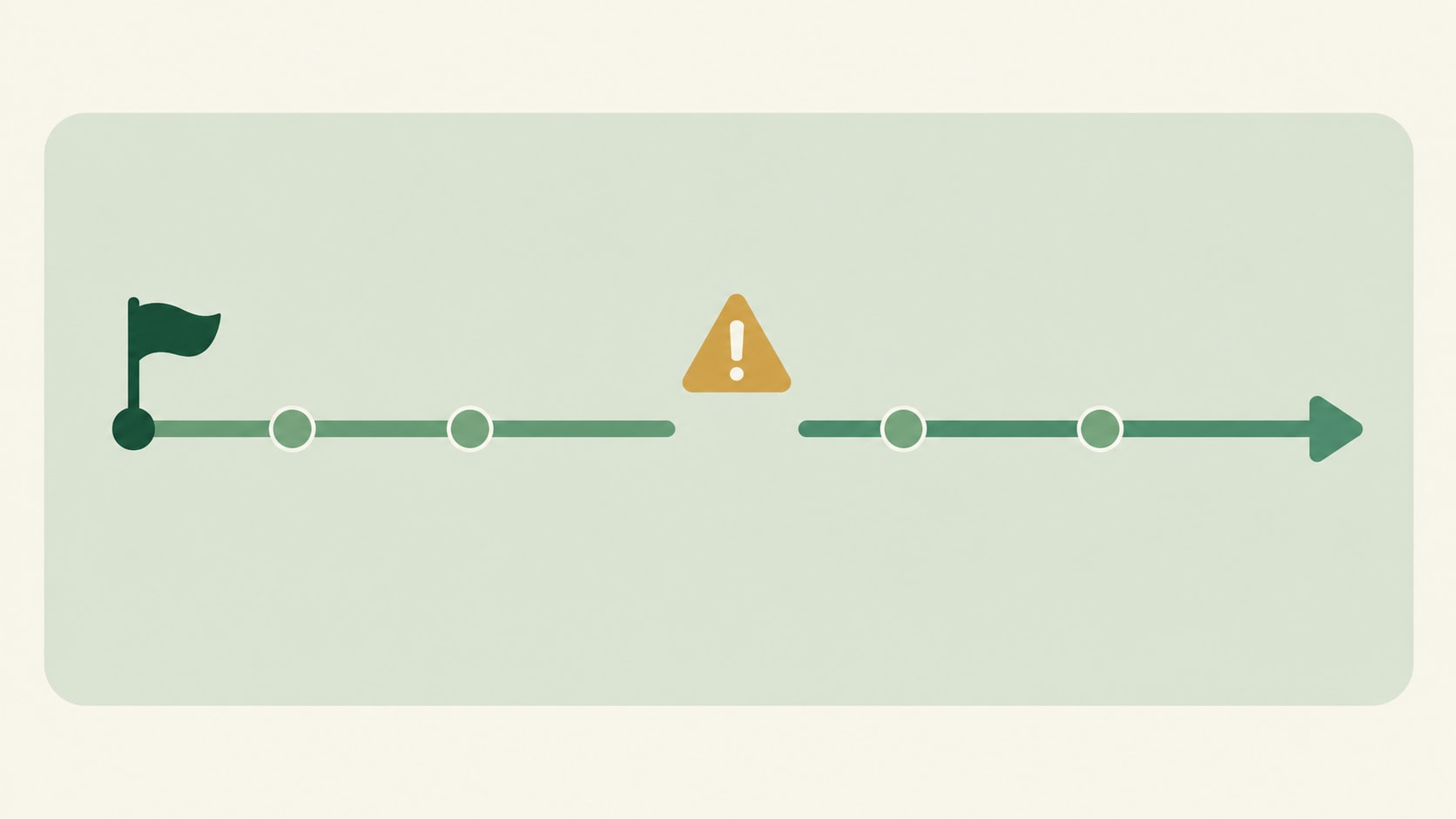
AI projects carry the usual risks of any software work, plus a few of their own. The output is probabilistic rather than fixed, quality depends heavily on data the team may not control, and success is harder to define than "the feature works."
The RAND report on why AI projects fail, published in August 2024, identified five root causes from interviews with experienced data scientists and engineers:
- Stakeholders misunderstanding or miscommunicating the problem the AI should solve.
- Lacking the data needed to train or run an effective model.
- Focusing on the latest technology rather than on the problem.
- Underinvesting in the infrastructure needed to manage data and deploy models.
- Applying AI to problems that are too difficult for the technology to solve.
Gartner's forecasts point the same way. In July 2024, it predicted that at least 30% of generative AI projects would be abandoned after proof of concept by the end of 2025, citing poor data quality, inadequate risk controls, escalating costs and unclear business value. In June 2025, it predicted that over 40% of agentic AI projects would be canceled by the end of 2027, for largely the same reasons.
Most of the challenges of implementing AI come from time and budget pressure, not from a lack of skill. Knowing why AI projects fail is useful only if it points to a fix, and that is what the list below is for.
9 AI implementation mistakes and how to fix them

Each entry follows the same shape: the mistake in one sentence, why it costs you, and how to fix it.
Mistake 1: Starting with the technology instead of the business problem
Projects often begin with a tool or model the team wants to use, rather than a specific problem the business needs solved.
Why it costs you: Without a defined problem, there is no way to judge whether the output is good enough, and the project drifts toward demonstrations rather than results. RAND lists this among the leading root causes of AI project failure.
How to fix it:
- Write the problem in one sentence that does not mention AI, such as "support tickets wait too long for a first reply."
- Confirm that someone in the business owns that problem and wants it solved.
- Only then ask whether AI is the right tool, or whether a simpler automation or process change would work.
Mistake 2: Launching without a measurable success criterion
Many projects start without a number that defines success, so nobody can say when the work is done or whether it worked.
Why it costs you: Unclear criteria lead to repeated rework, because each review surfaces new expectations. The team ends up debating whether the output is good enough instead of improving it, and the timeline slips without anyone deciding that it should.
How to fix it:
- Pick one primary measure, such as time saved per ticket, accuracy on a test set, or share of drafts accepted without edits.
- Record a baseline before the build starts.
- Put the measure and the target in the project brief, so everyone reviews against the same standard.
Mistake 3: Treating the proof of concept as the finished project
A pilot that works in a demo is often treated as nearly finished, when it still lacks the security, monitoring, error handling and integration that production needs.
Why it costs you: The gap between a working demo and a dependable system is where many projects stop. It is the pattern behind Gartner's prediction that a large share of generative AI projects would be abandoned after proof of concept.
How to fix it:
- Scope the pilot and the production phase separately from the start, each with its own budget and timeline.
- List what production requires, including access controls, logging, error handling and a fallback when the model is unsure.
- Set a go or no-go decision at the end of the pilot, based on the success measure from Mistake 2.
Our guide to turning AI prototypes into production-ready apps covers the engineering work that closes this gap.
Mistake 4: Underestimating data preparation
Teams often assume their data is ready to use, then discover it is incomplete, inconsistent or spread across systems that do not talk to each other.
Why it costs you: Data work can take as long as the AI work itself, and it rarely appears in the original estimate. RAND and Gartner both name data problems among the main reasons AI projects fail.
How to fix it:
- Run a short data audit before scoping the build: where the data lives, who owns it, and how complete it is.
- Start with one well-understood data source rather than every source at once.
- Budget data cleanup as its own line item, so it does not quietly eat into the build.
Mistake 5: Connecting too many systems at once
Ambitious first projects often try to link the AI to every relevant system in one release: the CRM, help desk, data warehouse and messaging tools together.
Why it costs you: Each connection adds permissions, testing and a new way to fail, and a problem in one system delays everything else. Scope expands faster than the team can deliver, and the project stalls.
How to fix it:
- Start with the single connection that delivers the most value on its own.
- Add systems one at a time, each with its own test and review.
- Keep a written list of deferred connections, so good ideas are parked rather than lost.
Our guide to what AI integration is covers how to plan connections in more detail.
Mistake 6: Leaving end users out of the design
AI tools are often designed by technical teams and handed to the people who will use them only at launch.
Why it costs you: A tool that does not fit how people actually work goes unused, however well it performs in testing. Many AI adoption challenges look like technical failures from the outside, which sends teams looking for the wrong fix.
How to fix it:
- Involve two or three future users from the first scoping session.
- Put the output where they already work, such as inside the CRM or help desk, rather than in a separate app.
- Run a short trial with real users before full rollout, and act on their feedback.
Mistake 7: Skipping risk controls and human review
Under deadline pressure, teams sometimes launch AI features without clear limits on what the model can do or a person checking its output.
Why it costs you: One visible error, such as a wrong answer to a customer or an incorrect record update, can undo trust in the whole project. Gartner names inadequate risk controls as a leading reason AI projects are abandoned or canceled.
How to fix it:
- Decide which outputs need human approval before they take effect, especially anything customer-facing or financial.
- Set clear boundaries on what the model can access and change.
- Log inputs and outputs, so errors can be traced and corrected.
Our guide to building with AI responsibly covers the questions to settle before launch.
Mistake 8: Budgeting for the build but not for running costs
Budgets often cover development and stop at launch, leaving out model usage fees, hosting, monitoring and ongoing tuning.
Why it costs you: Running costs grow with usage, so a successful tool can become an unplanned expense. Gartner cites escalating costs among the main reasons generative and agentic AI projects are dropped.
How to fix it:
- Ask for a running-cost estimate based on expected usage before approving the build.
- Set usage limits and spending alerts with your model provider.
- Review costs against the value delivered each month for the first quarter after launch.
For a full breakdown of project and running costs, see our guide to how much AI costs for a business.
Mistake 9: Leaving no owner after launch
Once a project goes live, the team that built it often moves on, and nobody is responsible for keeping it working.
Why it costs you: Models are updated, source data changes and business rules shift. Without an owner, accuracy slips gradually until people stop trusting the tool. RAND lists underinvestment in the infrastructure to manage and deploy models among its five root causes.
How to fix it:
- Name one owner for the system before launch, with time allocated to maintain it.
- If an outside specialist built it, agree on post-launch support before handover.
- Schedule regular checks of output quality against the original success measure, and keep documentation current so a new owner can take over quickly.
Keeping the original specialist involved is common. Among businesses that hired an AI development professional on Fiverr for the first time between October 2025 and July 2026, 22.3% went back to the same professional for more work within 90 days.
How to avoid these mistakes going forward: A mid-project review cadence
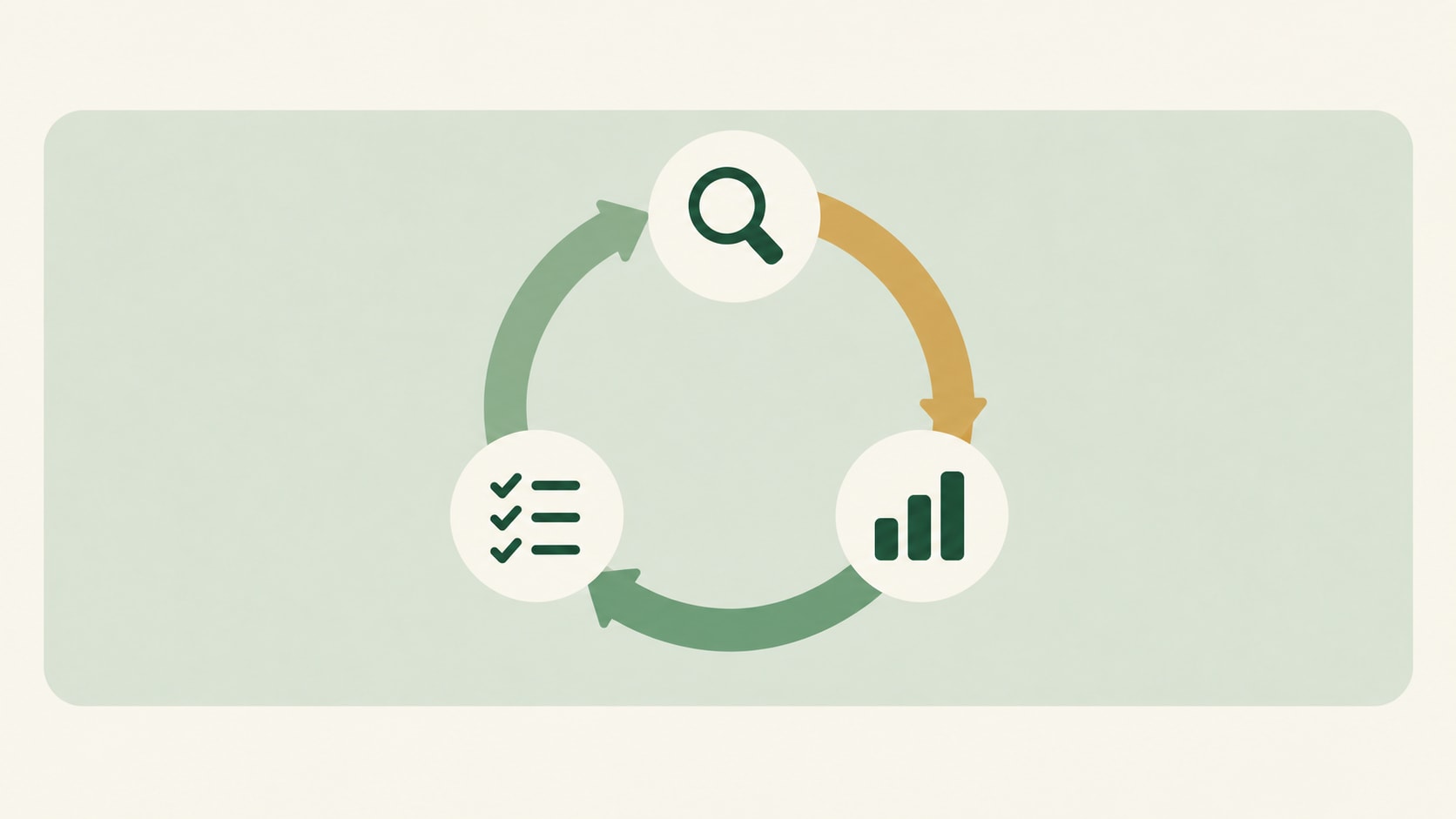
A regular review cadence catches most AI implementation challenges while they are still small and quick to correct. Three checkpoints cover all nine mistakes.
Every two weeks: Check progress and scope
Review progress against the success measure, confirm the scope has not grown without a decision, and check that the next milestone is still realistic. These short reviews catch Mistakes 2, 3 and 5 early.
At each milestone: Test with real users and real data
Put the output in front of real users, confirm that risk controls and human review work as planned, and update the running-cost estimate. This is where Mistakes 4, 6, 7 and 8 tend to show up.
Before handover: Confirm ownership
Confirm there is a named owner, a maintenance schedule and current documentation. This closes the gap described in Mistake 9, and it is also the moment to revisit Mistake 1: is the original problem actually being solved?
When to bring in outside help
Many of these fixes are best handled in-house, especially defining success measures, involving users and naming an owner. Outside expertise earns its place when the project needs skills the team does not have, such as data engineering, security review or production deployment, or when a stalled project needs a fresh, independent review.
An independent specialist can audit the current state, identify which of these mistakes applies, and propose a scoped plan to get the project moving again. Fiverr gives businesses access to AI developers and consultants who take on exactly this kind of focused recovery work, alongside longer engagements.
Most outside AI work stays on its agreed timeline. In the 12 months to October 2026, 13.2% of finished AI development projects on Fiverr involved a request to extend the delivery date, compared with 16.3% across the rest of Programming & Tech.
If the problem is unclear direction rather than execution, our guide to what AI consulting is explains when a consultant is the better fit.
Get your AI project back on track with Fiverr

Fiverr connects businesses with AI developers and consultants who can review a stalled project, fix a specific problem or take a pilot into production. You can compare portfolios, describe your current situation and agree on a clearly scoped piece of work before anything starts.
Flexible hiring models, from fixed-price projects to hourly and ongoing engagements, suit recovery work well. Start with a short review, act on its findings, and extend the engagement only if the next phase needs it.
Hire an AI developer on Fiverr
Get a stalled AI project moving again.

FAQs
Data readiness is usually the biggest challenge of implementing AI. Models depend on accurate, accessible data, and many businesses discover that their records are incomplete or scattered only after the project starts. A short data audit before scoping the build, with cleanup budgeted as its own line item, prevents most of the delays this causes.
Related Guides




About the author
Lior IluzVP R&D
Lior Iluz is a VP of R&D at Fiverr, leading cross-organizational engineering efforts across web and mobile platforms. With over a decade of experience spanning Android development, full-stack engineering, and senior R&D leadership, his background centers on building and scaling distributed, event-driven systems and modern cloud-native architectures. His work focuses on technical strategy, team leadership, and delivering resilient, high-impact products at scale.
