 August 3, 2026
 7 minute reading
Search engines are learning faster than ever, and so should we. If you’re still doing manual keyword checks or line-by-line content audits, it’s not possible to keep up with algorithms that are evolving daily. The future of SEO isn’t about guessing what Google wants anymore. Now it’s all about scale.
Happily, AI gives us that scale. Blending AI with SEO enables us to unlock insights, speed, and accuracy that traditional methods can’t match.
Why are we talking about this now? Because searching itself has changed. Google’s algorithms aren’t simple rules-based systems anymore. They’re run by AI models like ChatGPT, Perplexity, Gemini, etc.
These systems are designed to expand understanding beyond mere words to include meaning and intent. This means that the old way of working (with endless manual audits, keyword guessing, and gut-driven optimization) is now obsolete and that SEOs are adapting to Generative Engine Optimization (GEO).
Doing SEO without AI now is like showing up to a Formula 1 race in a horse-drawn carriage. You won’t stand a chance.
At the same time that the speed of data analysis has increased, data complexity has exploded exponentially. You have to track SERP volatility, watch for algorithm updates, analyze user intent, manage technical health, build authoritative backlinks, and create high-value content, all while the rules continuously update in the background.
But fear not. AI helped build this landscape, and it alone will help us navigate it. It’s not optional. Because the algorithm itself is powered by AI, its help is absolutely necessary.
In this guide, we outline clear, actionable steps for using AI to boost your rankings.
1. Audit Smarter, Not Harder
Collect real-time data
Prioritize issues automatically
Turn insights into tasks
2. Unearth Better Keywords with AI (ones that really convert)
Feed seed terms into an AI keyword engine
Spot gaps that competitors ignore
Validate with human judgment
Find SEO services by SEO experts









Top Rated
I will provide monthly SEO service with white hat link building for google first page
Offers video consultations




Vetted Pro
I will write and publish high quality SEO guest posts on high da websites
Offers video consultations

Top Rated
I will provide monthly SEO service for 1st page google rankings
Offers video consultations






Vetted Pro
I will do monthly seo service for wordpress, wix, squarespace, webflow, shopify website
Offers video consultations


Vetted Pro
Our agency will publish 10 powerful dofollow high da 50 plus guest posts
Offers video consultations


Vetted Pro
I will do reputation management and push down bad links
Offers video consultations









Vetted Pro
I will do complete monthly SEO, aeo, GEO for your website for google and ai rankings
Offers video consultations












Top Rated
I will do full website SEO optimization by onpage and offpage for top website ranking
Offers video consultations




Level 2
I will boost your cannabis business with a dedicated SEO expert 8 hour a day mon fri
Offers video consultations



Vetted Pro
I will do full SEO for top ranking on korean and indonesian sites
Offers video consultations










Vetted Pro
I will provide full SEO monthly services as your optimization expert
Offers video consultations


Vetted Pro
I will do google seo for ecommerce store on shopify and woocommerce
Offers video consultations



Vetted Pro
I will do monthly SEO services to rank on google in australia
Offers video consultations




Top Rated
I will provide website SEO services wix shopify wordpress website optimization ai GEO
Offers video consultations

Vetted Pro
I will develop a SEO strategy that will help your business grow
Offers video consultations


Vetted Pro
I will complete on page ai GEO optimization for wordpress shopify wix and squarespace
Offers video consultations


Vetted Pro
Our agency will optimize on page SEO for your wordpress website
Offers video consultations


3. Generate and Optimize Content on a Grand Scale
Use AI to draft smarter outlines
Inject expertise
Refine with AI editors
Measure engagement
4. Use Predictive Outreach to Grow Your Authority
Model link value
Auto-customize pitches
Track relationship health
5. Monitor SERPs Like a Hawk
Stream ranking shifts
Detect algorithm updates early
Respond quickly
Find an AI content editor for hire












Top Rated
I will professionally edit and refine your chatgpt and ai content
Offers video consultations











Level 2
I will humanize your ai content fast, with natural tone and zero robotic filler
Offers video consultations








Top Rated
I will edit your ai translation or ai generated content and do mpte
Offers video consultations













Top Rated
I will rewrite, edit, spin chatgpt content or proofread ai SEO article document text
Offers video consultations




Top Rated
I will expertly edit german, spanish, french, english chatgpt ai content proofreading
Offers video consultations


Top Rated
I will rewrite your ai content in spanish to make it look human made
Offers video consultations


























Bottom Line: Let AI Do the Heavy Lifting
A Glimpse Into SEO’s Future
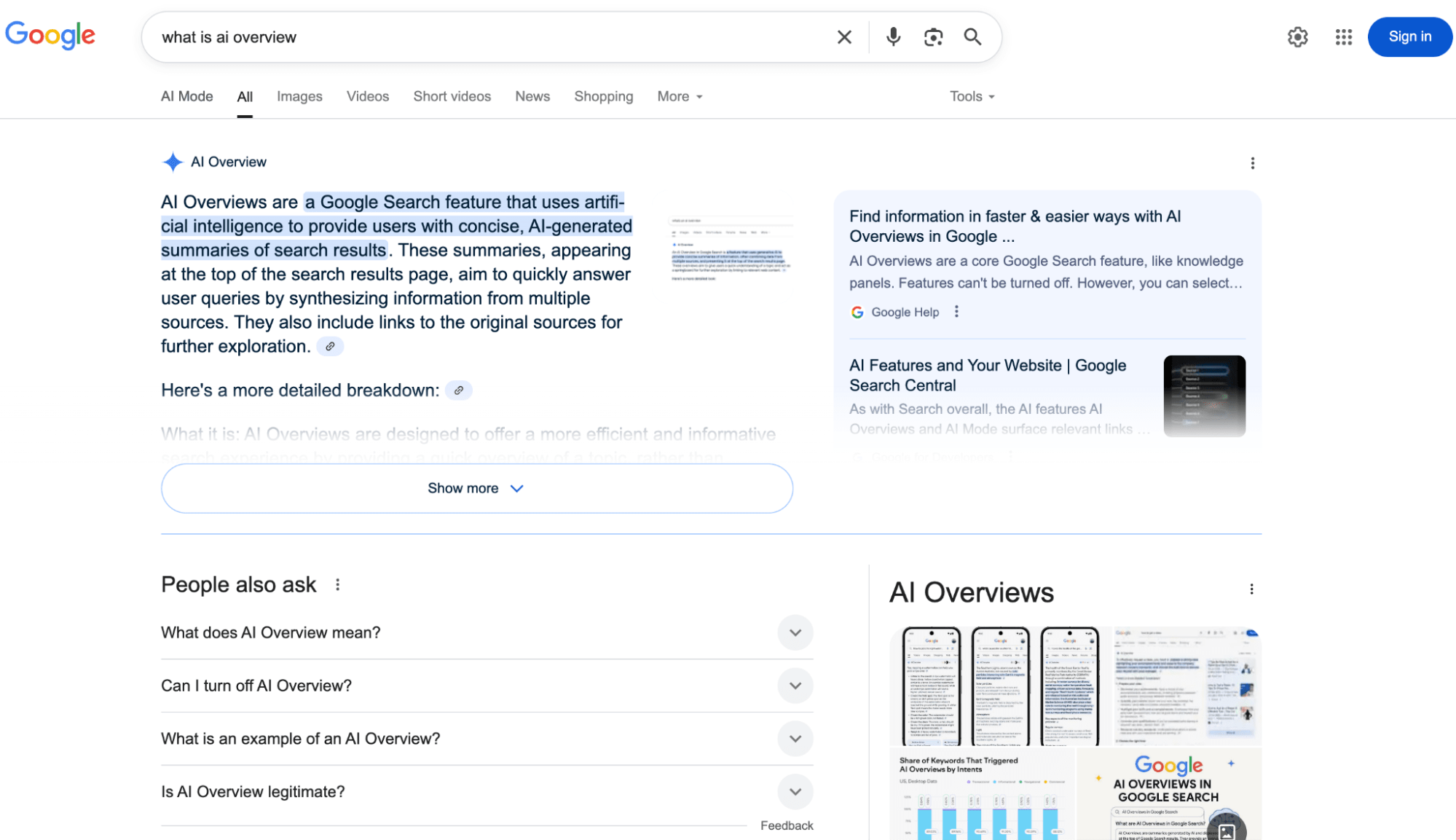
- AI-Generated Search Results. Google has rolled out its AI-powered Search Generative Experience (SGE) or AI Overviews, which has already changed the landscape. Instead of just linking to websites, now we see full AI-generated answers right on the top of the page. Going forward, this shift will alter how businesses approach visibility, click-through rates, and the importance of organic traffic.
- Fewer Clicks, More Zero-Click Searches. With search engines answering questions directly, more users get what they came for without even clicking a result. This means SEO will become less about keyword rankings and more about appearing where decisions are made. That might mean featured snippets, AI summaries, maps, or product carousels.
- Voice and Visual Search Will Matter More. Voice assistants and image search are moving SEO beyond mere text. Businesses will need to optimize for natural speech patterns and ensure that visual assets are discoverable and properly labeled.
- Hyper-Personalized Search. Increasingly, search results are becoming tailored to the individual, based on location, previous searches, device usage, and even inferred preferences. Keyword rankings are no longer a one-size-fits-all metric.
- The Rise of Predictive Search. Search engines are moving toward predicting user needs before the user even presses a single key. Content strategies will shift from reactive (answering existing questions) to proactive (appearing for needs users don’t even know they have yet).
- More Dependence on AI Tools for SEO Success. As algorithms become more sophisticated, the datasets that influence rankings grow larger and become increasingly complex. Human intuition alone won’t be enough anymore. AI isn’t just an assistant; it’s becoming the operating system behind modern SEO.
So get in the fast lane now or get passed.
SEO Transformation with AI FAQs
Will AI replace human SEO experts?
Can AI fix all my ranking issues instantly?
What AI skills should SEOs learn first?

Related Guides






About Author
A.D SEO Agency
A.D SEO Agency is a top-rated, award-winning Fiverr Pro agency founded in 2017. Specialising in full-stack SEO, GEO-technical fixes, content strategy, and white-hat link-building. They’ve ranked 20,000+ businesses on Google and delivered nearly 5,000 Fiverr projects, earning more than US $1 million in sales and 1,000-plus five-star reviews.
